Robot vacuums aren't just autonomous cleaners anymore. They're actual smart home devices — with map-based room zone cleaning, routines triggered by presence detection, integration with Home Assistant, and in some cases cameras that let you check in on your house while you're at work.
The difference between a cheap robot vacuum and a good smart home robot vacuum is enormous. A $200 unit from a random brand bounces around randomly and maybe avoids big obstacles. A $600–$900 unit from Roborock, Dreame, or iRobot knows every room in your house, remembers where the dog bowl is, lifts its mop pad before hitting carpet, and empties itself for 60+ days.
I've run a Roborock as my daily driver for two years. Here's what I'd buy today.
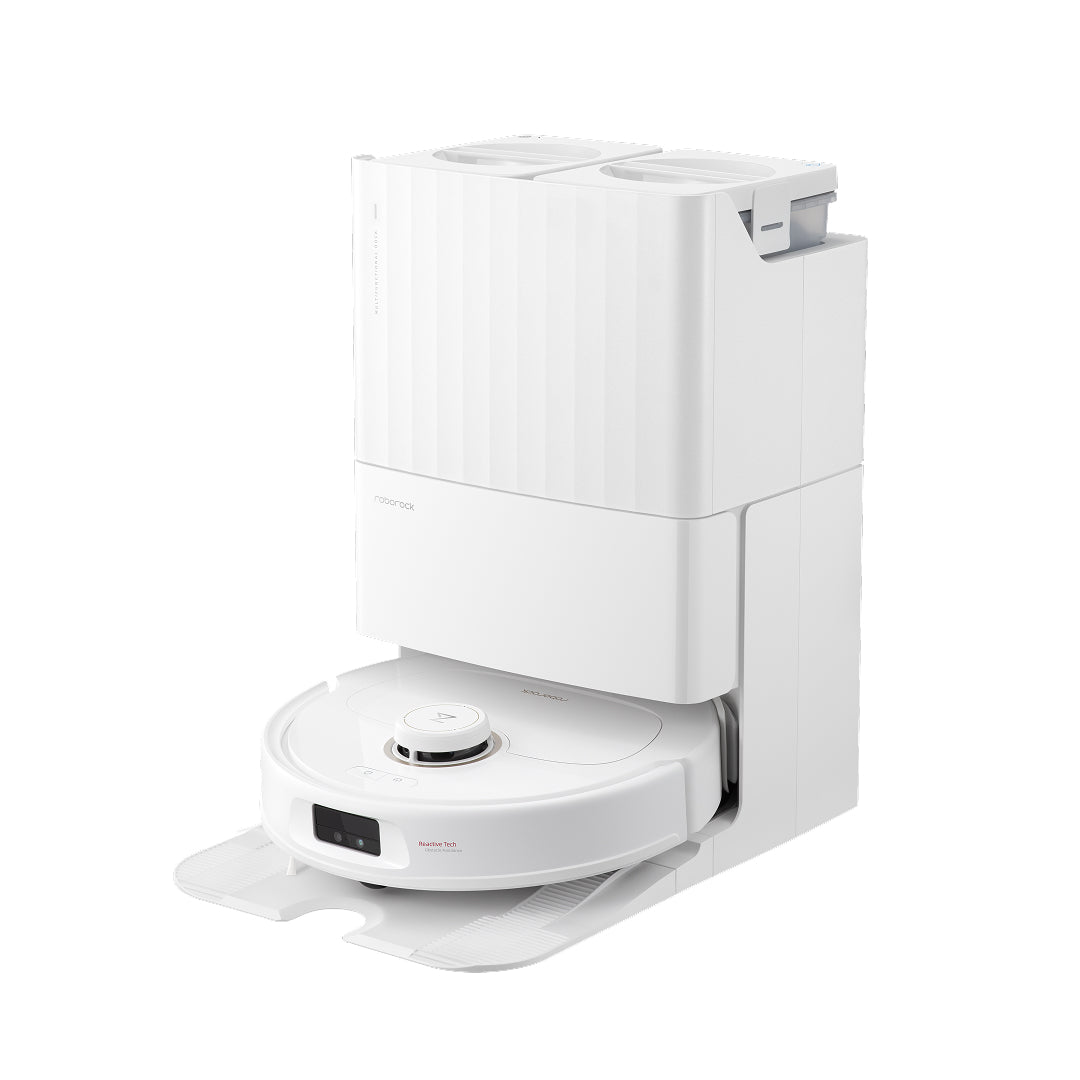
Roborock Qrevo MaxV — ~$750–900
The Qrevo MaxV is my recommendation for most people. It sits in the sweet spot: premium features without full flagship pricing, and the Roborock integration ecosystem is the best in the category for smart home users.
Specs: 7,000Pa suction, dual spinning mops with auto mop-lifting, RGB camera for obstacle avoidance (62 object types), hot water mop washing, auto-empty base, auto-refill and drain capability. It handles carpet-to-hard-floor transitions without intervention and the auto mop lift means you can run a full cleaning cycle without worrying about wet mop tracks on rugs.
The obstacle avoidance: The RGB camera is genuinely good. It identifies and avoids pet waste, cables, socks, and other common floor hazards. I've tested it repeatedly and the cable detection saves me from having to pick up every charger before running a cycle. It's not perfect — thin phone cables on dark floors can still be missed — but it's dramatically better than LiDAR-only units.
Smart home integration: Roborock has native Alexa and Google Assistant support. You can say "Hey Google, clean the living room" and it goes directly to that zone. The Roborock app has solid room mapping with the ability to name zones, draw no-go areas, and set cleaning preferences per room.
Home Assistant: The Roborock integration in HA is local and comprehensive. You get: start/stop/pause/dock controls, room-specific cleaning commands, map entity, consumable tracking, and status sensors. Zone cleaning via HA service calls works — I have an automation that cleans the kitchen after my dinner routine, triggered by the time and my presence. This has worked without failure for months.
Apple Home / Matter: Roborock supports Alexa and Google natively. HomeKit support is limited but the Roborock app's Siri Shortcut options fill most of the gap for Apple users.
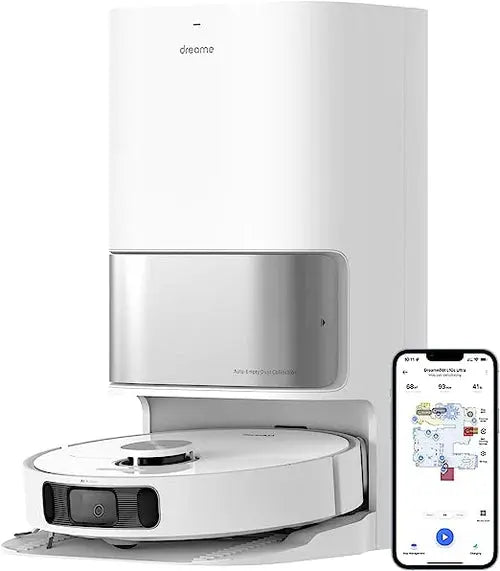
Dreame L10s Pro Ultra Heat — ~$699–799
Dreame has closed the gap with Roborock significantly in the past two years. The L10s Pro Ultra Heat is arguably the better mop unit — the "Heat" version uses 58°C (136°F) hot water to clean the mop pads, which is genuinely more effective than cold water washing.
What's impressive: The MopExtend technology extends the mop arm sideways to reach under furniture edges and along walls more effectively than fixed mop designs. The 7,000Pa suction matches Roborock. At ~$700 on sale, it's frequently priced below the Roborock.
Smart home integration: Works with Alexa and Google Assistant. Dreamehome app supports room-based cleaning with named zones. Matter support was added in 2025 for basic on/off/dock control.
Home Assistant: The Dreame integration in HA works well. Room cleaning commands, status sensors, consumable tracking. It's slightly less comprehensive than Roborock's HA integration — some advanced features require more configuration — but it covers the daily use cases.
Where Dreame loses to Roborock: The Dreame app is less polished. Map persistence across resets is less reliable. HA integration documentation is less community-supported.
iRobot Roomba Combo j9+ — ~$799–999
iRobot is a legacy brand that got better by solving a specific problem nobody else addressed: a truly retractable mop.
Most combo vacuum/mop units deal with carpets by either lifting the mop a few millimeters (sometimes not enough) or stopping at carpet boundaries. The Roomba j9+ retracts the mop completely into the top of the robot when it detects carpet. This is the only unit where you genuinely don't have to worry about the mop touching carpet at all.
P.O.O.P. guarantee: iRobot's "Pet Owner Official Promise" guarantees the j9+ will avoid pet accidents. If it doesn't and the robot runs through waste, iRobot will replace the unit. This is a real guarantee that has been honored. For households with dogs or cats, this matters.
Smart home integration: Amazon acquired iRobot and then the acquisition fell apart. iRobot is now independently operated under new management (Picea Robotics acquired it). Alexa integration remains excellent — given the Amazon history, the Echo ecosystem works seamlessly. Google and HomeKit integration is serviceable.
Home Assistant: iRobot integration in HA is available but cloud-dependent. Unlike Roborock, there's no local API. This means if iRobot's servers have issues, your HA automations break. This has happened. For HA users who want local control, iRobot is the wrong choice.
The appeal: The retractable mop and P.O.O.P. guarantee are genuine differentiators. If you have pets and mixed flooring, iRobot solves a real problem that other brands handle less elegantly.
Ecovacs Deebot X8 Pro Omni — ~$700–850
The Ecovacs lineup has been iterating rapidly. The X8 Pro Omni was a standout when released but has been superseded by the X9 Pro Omni and X11 OmniCyclone. The X8 is still available at discounted prices and represents good value.
D-shaped body: Most robot vacuums are circular. Ecovacs uses a D-shape on the Deebot X series, which gives better corner cleaning and edge performance. This sounds minor but it makes a meaningful difference in rooms with square corners.
OZMO Turbo mopping: High-pressure rotating mop pads that actually scrub rather than just damp-wipe. For stuck-on debris, this is noticeably more effective.
Smart home integration: Works with Alexa and Google Assistant. ECOVACS Home app has room mapping, no-go zones, and scheduled cleaning. Matter support is in progress for newer models.
Home Assistant: Community integration exists and is maintained, but it's not officially supported by Ecovacs. Less reliable than Roborock's HA integration. If you're building serious HA automations around your vacuum, Roborock is the safer choice.
The Smart Home Integration Ranking
If Home Assistant integration is the deciding factor:
- Roborock — Local API, comprehensive entity exposure, well-documented community, works reliably
- Dreame — Local integration, slightly less polished but functional
- Ecovacs — Community integration, works but less stable
- iRobot — Cloud-only, breaks when servers have issues
For Alexa or Google Assistant voice control, all four are roughly equivalent. The differences are in app quality and smart home depth.
The Mop Question
Everyone wants to know: do the combo vacuum/mop units actually mop or just drag a wet pad around?
The honest answer: It depends on the unit and your expectations. On fresh spills and light soil on hard floors, modern spinning mop units (Roborock dual spinning, Dreame DuoScrub) make a real difference over dragging a pad. They don't replace mopping before guests arrive, but they keep floors clean between real mops. For daily maintenance on hard floors, they're genuinely useful.
If you don't have hard floors, get a vacuum-only unit and save $200–300.
My pick: Roborock Qrevo MaxV. The local Home Assistant integration, the obstacle avoidance camera, and the reliable two-year track record at a price point that doesn't make you wince. Grab one.