I've been using the iPhone 16 Pro for three weeks, and I'm genuinely torn. It's a very good phone. But is it better than my old 15 Pro? That's more complicated.
Let me walk through what actually matters, what's marketing hype, and who should actually upgrade.
The Hardware: What's Different?
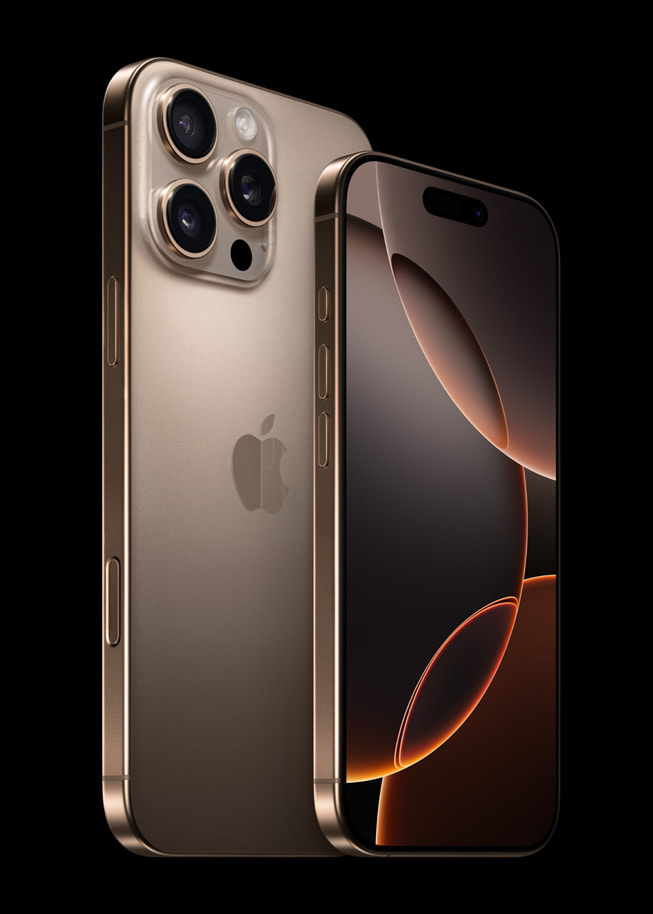
The 16 Pro starts at $999 for 128GB, same as the 15 Pro did. Design is essentially identical—you won't notice the difference unless you hold them side by side. Titanium frame, flat edges, same weight. The Desert Titanium color is a real upgrade though. That warm taupe finish is gorgeous.
The Camera Control Button
This is the actual story. On the right side of the phone, where the mute switch used to be on older iPhones, Apple added a capacitive button that controls the camera with a half-press and full press.
Half-press is a preview and focus lock. Full press takes the photo. But you can customize it—half-press for zoom, full press for exposure. Swipe left/right to adjust. It's more tactile than tapping the screen, and your hand feels more stable when you're composing a shot.
Does it revolutionize phone photography? Not really. But if you take a lot of photos, it's an improvement worth having. I found myself using it more than I expected.
Display and Chip
ProMotion 120Hz display (same as 15 Pro). A18 Pro chip with a faster Neural Engine—noticeably quicker when processing on-device AI tasks like photo cleanup. The difference is real but not dramatic in daily use.
6.3-inch screen is the same. No change there.
Camera Specs
Main: 48MP at f/1.78 (4x higher resolution than the 15 Pro's 12MP, same sensor size, effectively just more pixels from the same light). Ultra-wide: 48MP (same upgrade). Telephoto: 12MP 5x optical (unchanged from 15 Pro).
The 48MP main sensor means you get more flexibility in post-processing. Crop tighter, fix composition in Lightroom, see more detail. It's not a bigger sensor or brighter aperture—it's more pixels from the same physics. In bright daylight, the difference is marginal. In lower light, the 15 Pro honestly holds up fine.
4K 120fps video is here. Professional filmmakers care about that. Most people won't notice the difference from 4K 60fps.
Battery Life
Rated for all-day use. I'm averaging 18 hours between charges with moderate use. The 15 Pro got similar numbers. Technically it's "about the same as last year," which is how Apple phrased it, and that's accurate.
Apple Intelligence: The Overhyped Feature
This is where I need to be honest with you. Apple Intelligence was underwhelming at launch.
Notification summaries? They work, but you don't need AI to scan and group notifications. Writing tools (rewrite, proofread) are actually useful if you compose long emails. Genmoji is novelty—I've used it twice. Clean Up in Photos removes objects from the background, and it works decently but isn't magic.
The big promise—on-device LLM that runs entirely on your phone—rolled out months late and with significant limits. You can't actually have full conversations. It integrates with ChatGPT for complicated requests, which means it's not fully private anyway.
Has it improved with updates? Yes. The latest version is better at nuance and context. But it's still not the revolution Apple promised.
For the smart home crowd—which is probably you if you're reading this—Apple Intelligence does one genuinely useful thing: the Neural Engine processes Home Key requests faster than before. Unlocking your smart lock with your phone is snappier. That's nice but not $999-nice.
Why Someone Might Upgrade From 14 Pro or Earlier
If you're on a 14 Pro or older, the jump to 16 is solid. You'll see real improvements—the screen is brighter, the chip is faster, the camera is better, and the Camera Control button is actual new hardware.
The battery will feel stronger after three years of degradation. The 5x telephoto is smoother. The everyday experience is noticeably snappier.
Why You Can Probably Wait If You Have a 15 Pro
Here's the hard truth: the 15 Pro is still a very good phone. The improvements are incremental. The only genuinely new hardware feature is the Camera Control button. Everything else is a polish pass.
If you take a lot of photos, the Camera Control button might be worth it. If you don't, you're looking at a $999 phone that does almost everything your 15 Pro already does.
Apple's own marketing data probably shows that people keep phones for three years now instead of two. The 16 Pro doesn't justify a two-year upgrade cycle.
Apple Home Integration—Actually Relevant for This Blog
The 16 Pro supports Thread out of the box. So does the 15 Pro. No change there.
What matters: faster on-device processing for HomeKit operations. Unlocking a smart lock, checking a secure video stream, running a HomeKit automation—these are quicker. Not dramatically, but noticeably.
The Home app acts as your local hub (if you have an Apple TV or HomePod as well). The faster Neural Engine makes Thread commissioning slightly smoother, but if you're already using Home, you won't notice this much.
If you're a Home Assistant person, the iPhone matters less anyway. You're using the HA Companion App, not HomeKit.
The Camera Samples
I took the same shot with both the 15 Pro and 16 Pro in various conditions. In bright daylight, you need a magnifying glass to see the difference. The 48MP sensor gives you more detail on crop, but the color science is identical.
In low light (indoor restaurant), the 15 Pro's noise handling is actually subjectively better. The 16 Pro has more detail but also more visible noise. They're different priorities, not objectively better or worse.
Night mode is essentially unchanged. Telephoto is imperceptibly sharper.

The Camera Control button is the actual differentiator. When you're composing in the moment, the tactile input matters more than the marginal sensor improvement.
Final Verdict
The iPhone 16 Pro is an excellent phone. If you need a phone, this is one of the best you can buy.
But if you already own a 15 Pro? You're not missing out. Skip this generation, wait until 2027 when Apple has something genuinely new to show.
If you're on a 14 Pro or older, this is a reasonable upgrade. The Camera Control button is a legitimate hardware innovation, and everything else has improved enough to feel fresh.
If you're upgrading from an older Android phone, this is excellent. The ecosystem lock-in is real, but the cohesion is also undeniable.
The Desert Titanium color is the best reason to upgrade. I'm not joking. It looks better than previous colors, and you'll see it more than any spec.
Buy iPhone 16 Pro on Amazon | Apple iPhone 16 Pro Specs
I'll probably use this phone for three years. The Camera Control button will feel natural by then. Apple Intelligence might actually become useful by then. And by 2028, the upgrade will feel more urgent. That's how it should work.