Water damage is the #1 homeowner insurance claim in America. The average claim is around $12,000. That's enough to wreck your year and destroy irreplaceable belongings in your home.
The stupidest part? Most of that damage is completely preventable. A $50 leak detection system can stop a $12,000 disaster.
I didn't install water sensors until six months ago. My first week owning them, a supply line to my washing machine started leaking. I caught it at 2 a.m. thanks to a notification on my phone. Fixed it in 10 minutes. No water damage. No insurance claim. No $12,000 loss.
That one alert already paid for the whole system.
Understanding Your Options
There are two tiers to smart water protection. Tier one is detection and notification. Tier two adds automatic shut-off.
Most homeowners should start with Tier one and upgrade to Tier two if they have the budget.
Tier One: Leak Sensors (Detect and Alert)
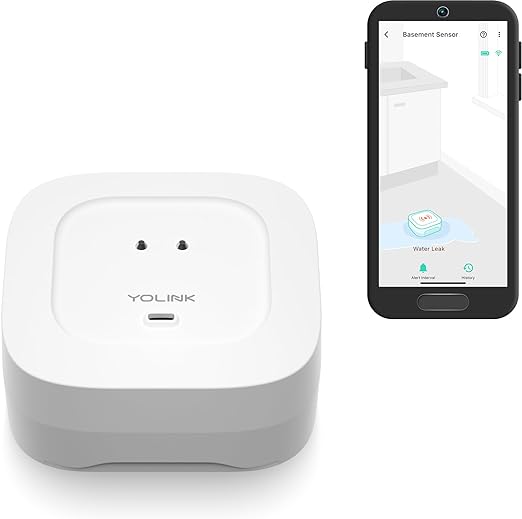
These are wireless sensors that sit on the floor under appliances or near pipes. When they detect water, they alert you immediately.
YoLink Water Leak Sensor 4-Pack (~$50)
This is the best value option I've found. The four sensors cost around $50, and they use LoRa wireless protocol.
Here's why that matters: LoRa has insane range. We're talking 1,000+ feet outdoors, several hundred feet indoors through walls. Most Wi-Fi sensors lose connection if they're more than 30 feet from your router. YoLink doesn't care.
It pairs with a YoLink Hub ($20) that connects to your Wi-Fi and bridges to the cloud, which then sends notifications to your phone. Battery lasts 2+ years per sensor. The sensors are flat and sit flush against the floor—they don't stick up like a speed bump.
Home Assistant integration is excellent. You add the YoLink hub to HA and get entities for every sensor.
The 4-pack covers most homes. Stick them under your water heater, washing machine, dishwasher, bathroom sink, and master bedroom toilet. That handles 80% of common leak points.
I've been running YoLink sensors for six months and haven't had a single missed detection or false alarm. The range is genuinely better than anything else I've tested.
Verdict: Best value. Recommended if you're just starting out.
Aqara Water Leak Sensor T1 (~$18 each)
Zigbee-based sensor that works with HomeKit, Home Assistant, and Alexa. Flat design like YoLink. Battery lasts about two years.
The advantage is integration with HomeKit if you're an Apple Home user. Zigebee also means zero cloud dependency if you're running Zigbee2MQTT or Home Assistant's native Zigbee coordinator.
The disadvantage is range—Zigbee is limited to 30-100 feet depending on your mesh strength. If your Zigbee network is weak, you'll get delayed alerts.
The sensor has a 100dB local alarm (loud enough to wake you up if the hub isn't reachable), which is actually useful.
Verdict: Great if you're already running Zigbee. Skip if you're not.
Govee Wi-Fi Water Sensor (~$12)
The budget option. Wi-Fi direct (no hub needed), 100dB alarm. Cloud notifications.
The price is hard to beat, but Wi-Fi connectivity is its weak point. If your garage Wi-Fi is spotty, you might not get alerts.
Verdict: Fine for one or two sensors in well-covered areas. Skip if you need whole-home coverage.
Tier Two: Auto Shut-Off Valves (Detect AND Stop Water)
This is where you move from "I'll get an alert" to "the water stops automatically." That's a big deal.
Moen Flo Smart Water Monitor (~$500-700 installed)
The premium option. This is a whole-home system that monitors water pressure and flow rate throughout your house. It has artificial intelligence that learns your normal usage patterns.
The Flo device sits on your main water line (you'll probably need a plumber to install it—roughly $300-400 for professional installation). It measures pressure and flow in real time.
If it detects abnormal flow—a toilet running for six hours, a supply line gushing water, an outdoor line rupturing—it can automatically shut off your main water line.
You get a beautiful app that shows daily usage, weekly trends, seasonal patterns. You can identify which appliances are water hogs.
Solar users benefit from the water usage tracking. Net metering tracking is accurate to the gallon.
The big advantage: it works on physics, not just sensors. A tiny pinhole leak in a wall might not trigger a sensor, but Flo detects the abnormal pressure change and alerts you before visible damage happens.
Verdict: Best protection if you can afford it. The peace of mind is worth it.
YoLink Motorized Valve + Leak Sensors (~$100-120 total)
The DIY option. You get the same YoLink leak sensors, but you add a motorized ball valve (~$60-70) that you install on your main water line.
When a YoLink sensor detects water, it sends a signal that triggers the motorized valve to close. Water stops in seconds.
Installation: shut off your main water, cut the main line, install the ball valve (adapters and connectors included), and you're done. Most DIYers can handle it in 30 minutes. If you're uncomfortable with it, a plumber charges $100-150 to install.
This solution gives you 80% of what Moen Flo offers at 20% of the price. You don't get the usage analytics or the AI learning, but you get automatic shut-off and emergency alerts.
For most homeowners, this is the sweet spot.
Verdict: Best bang for buck if you're willing to DIY or pay a plumber once.
Sensor Placement Strategy
You want sensors in these locations:
Absolutely Essential:
- Under the water heater
- Under the washing machine
- Behind the toilet (one sensor per bathroom)
Highly Recommended:
- Under the dishwasher
- Under the kitchen sink
- Near the main water line (in your water meter area)
Nice to Have:
- Under the bathroom sink
- Near the furnace humidifier
- Basement sump pump area
- Garage area near any water lines
- Attic (if you have a water line running through it)
Pro tip: Test your sensors after installation. Turn on a faucet and drip water on a sensor to make sure notifications actually arrive. Don't assume it's working until you've confirmed it once.
Comparison Table
| Feature | YoLink Sensors | Aqara Sensors | YoLink Motorized Valve | Moen Flo |
|---|---|---|---|---|
| Cost (4 sensors) | $50 | $72 | $100-120 | $500-700 |
| Auto Shut-Off | No | No | Yes | Yes |
| Range | 1000+ ft | 30-100 ft | N/A (main line) | N/A (main line) |
| Home Assistant | Yes | Yes | Yes | Yes |
| HomeKit Support | No | Yes | No | No |
| Battery Life | 2+ years | 2 years | N/A (wired) | N/A (wired) |
| Setup Complexity | Easy | Easy | Moderate | Professional |
| AI Learning | No | No | No | Yes |
Real-World Impact
My insurance agent told me that homeowners with water leak detection systems file fewer claims and often get small discounts on their premiums. Not massive discounts, but usually 5-10% off water damage coverage.
More importantly, you sleep better. You know that when 2 a.m. rolls around and a pipe bursts, you're not going to wake up to $12,000 in damage. You're going to wake up to a notification and spend 15 minutes fixing it.
That peace of mind is worth the $50 entry price alone.
My Recommendation
Start with the YoLink 4-pack (~$50) if you're budget-conscious. Get them installed under your five most critical appliances. Live with them for a month. If you feel protected, you're done. If you want automatic shut-off, add the motorized valve system.
If you've got $500+ and you want the absolute best solution, jump straight to Moen Flo. The usage analytics alone will probably save you money in reduced water consumption.
Either way, please install something. Water damage is one of the few home disasters that's completely preventable with smart home technology.