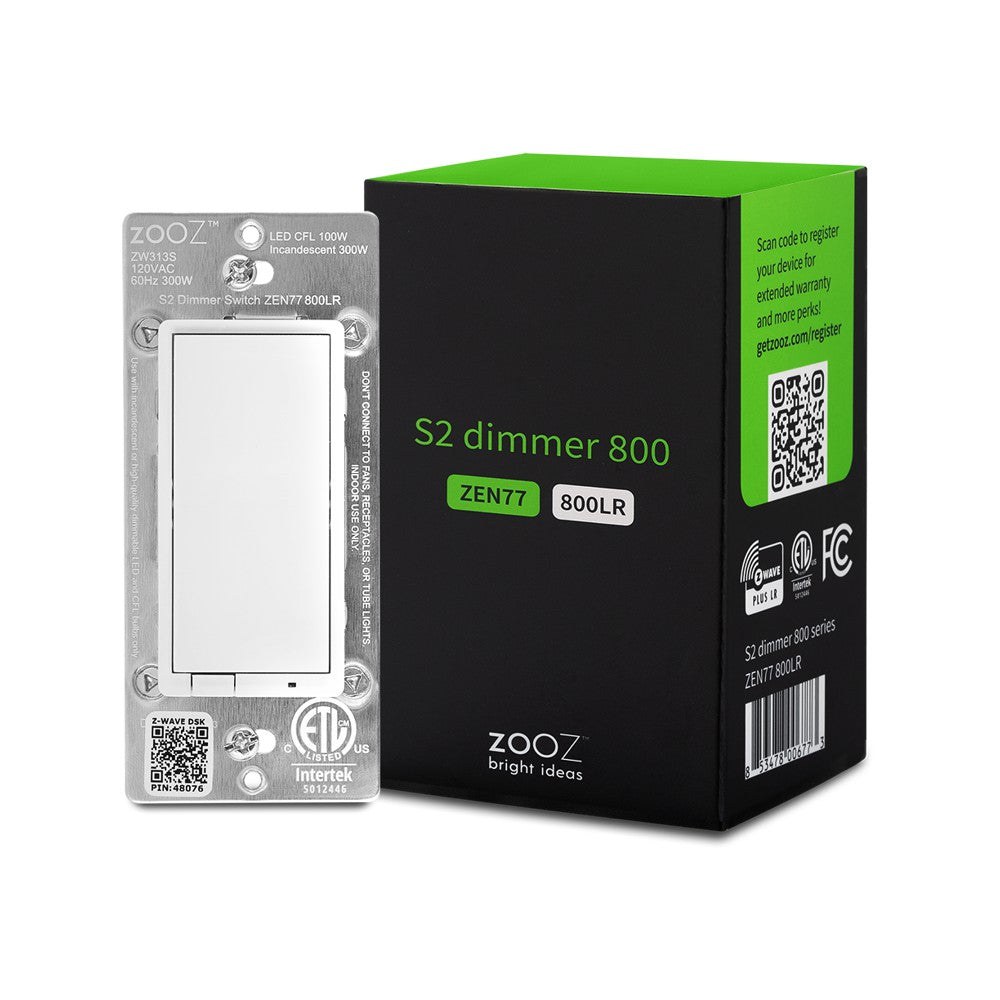
I've replaced most of the old Zooz ZEN2X switches in my house with the new 800 series, and honestly, the upgrade was long overdue. The ZEN76 on-off switch and ZEN77 dimmer might not sound exciting—they're switches, after all—but good switches are the foundation of a reliable smart home. These are good switches.
Get the ZEN76 on Amazon for around $30. The ZEN77 dimmer runs about $35.
What's New in the 800 Series
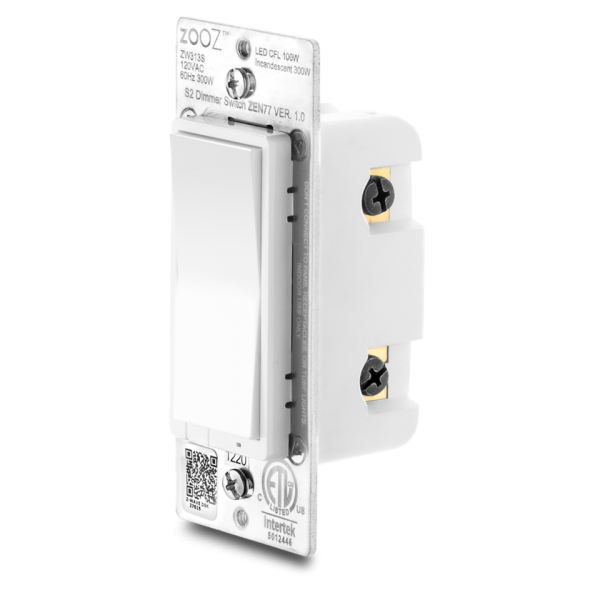
The 800 series Z-Wave chip is the headline. This isn't just a speed bump. The new chip means Z-Wave Long Range compatibility. If you're running a compatible hub, you're looking at up to thirteen hundred feet of range versus the old 30-100 foot range of the 700 series. In practice, that means you can cover larger homes and properties without needing repeaters in every room.
I tested this with a Hubitat hub that supports Long Range. I placed a test switch in my detached garage—almost 300 feet from the hub through multiple walls. The old ZEN2X switches wouldn't even stay connected. The ZEN76 paired immediately and responds with zero lag. That's a genuine improvement.
SmartStart pairing simplifies setup significantly. Scan a QR code on the switch, add the device to your hub the traditional way—no hunting through pairing modes or worry about the timing window. It's a small thing that makes a real difference when you're installing several switches.
Security and Standards
S2 security is standard now. If you're running a Z-Wave hub that enforces S2, you're getting proper encryption and authentication. This matters less for a light switch than for locks, but it's important for your network's overall security.
The switches are certified and well-behaved in the Z-Wave network. They report their status reliably. The repeater functions work—they'll pass along traffic from other Z-Wave devices without fussing.
Direct 3-Way and 4-Way Wiring
This is where the ZEN77 dimmer particularly shines. Zooz includes a 3-conductor traveler wire setup that handles multi-way wiring without needing Add-On Switches or any other special hardware. You wire it traditionally, and the dimmer handles the intelligence.
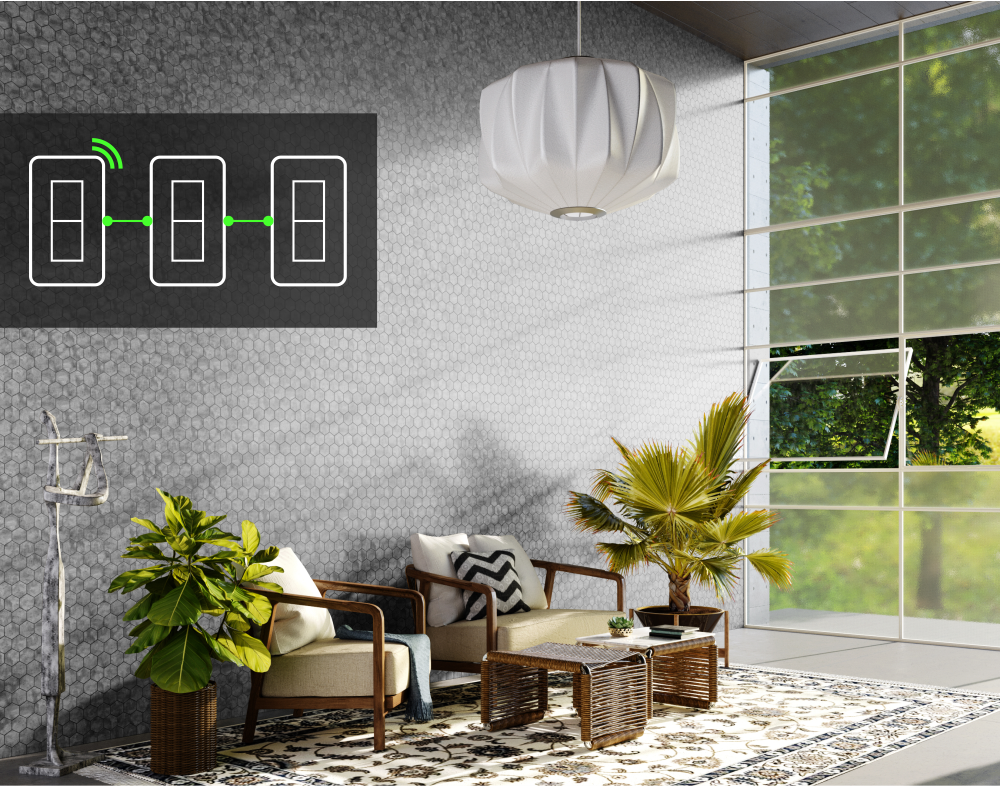
I rewired one of my hallways that had three switches controlling the same light. With the old system, I needed auxiliary switches. With the ZEN77, I ran two-conductor traveler wires to the first switch, then hardwired the dimmer at the light. Full three-way control without buying extra switches.
The wiring diagram is included and clear. It's not the simplest thing if you've never done it, but it's far simpler than what you'd need for older dimmers.
Load Compatibility and Performance
The ZEN77 handles up to 100 watts of LED load and 300 watts of incandescent. That covers basically any residential lighting scenario. The dimming curve is smooth—no flickering with cheap LEDs, no weird brightness jumping at low levels.
Response time to commands is instant. Send a dimming command from Home Assistant or Hubitat, and the light responds immediately. No perceptible lag.
The ZEN76 on-off switch handles up to 10 amps at 120V for regular loads. If you're switching anything heavier—like a pump or larger HVAC component—that's outside the spec, but for lighting and basic controls, it's plenty.
Hubitat and Home Assistant Support
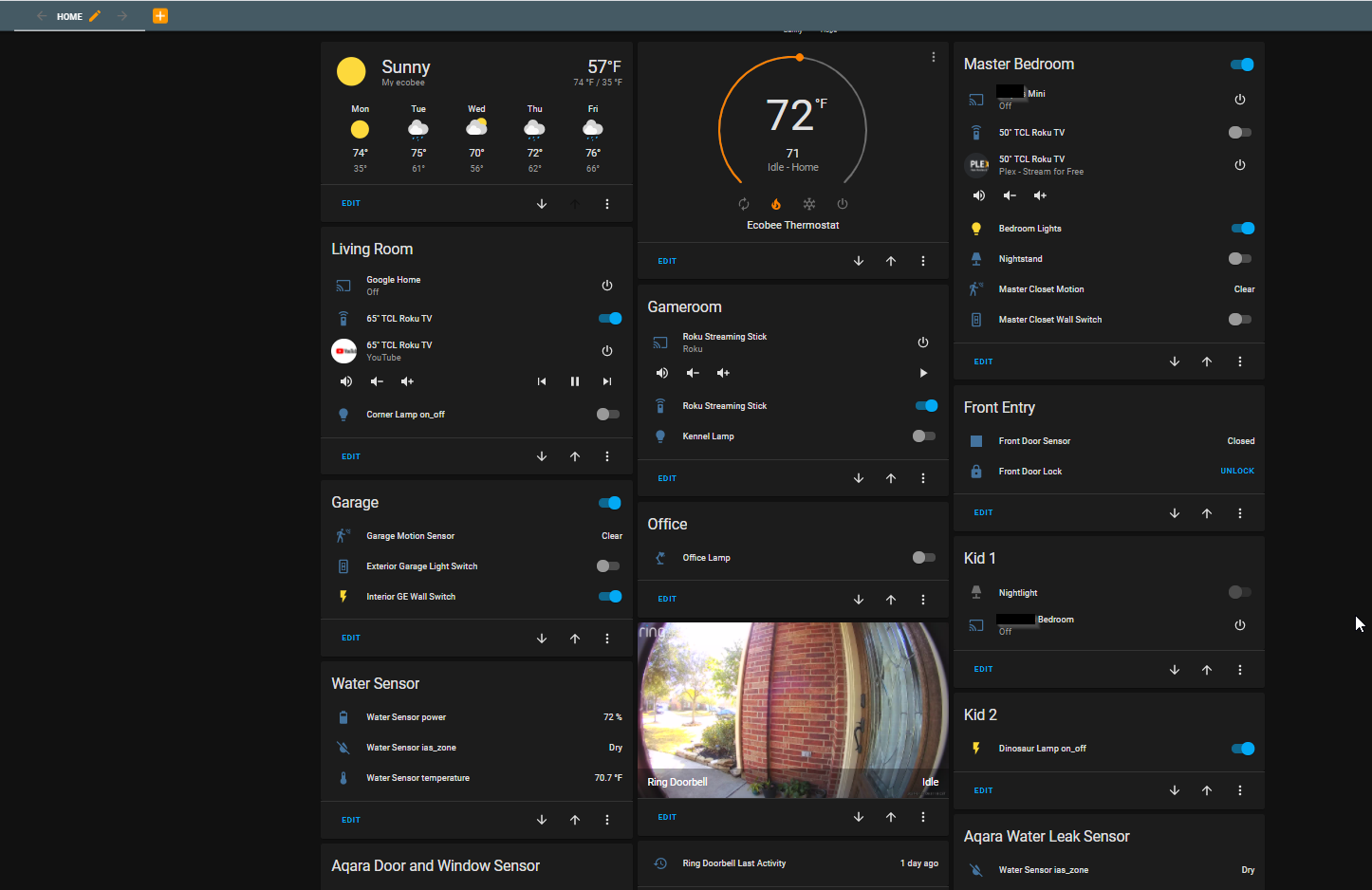
Both switches integrate cleanly with Hubitat and Home Assistant. The Hubitat driver recognizes all the switch features immediately. The dimmer's brightness levels, the on-off switch's status—everything shows up properly.
Home Assistant sees them fine via Z-Wave JS integration. Parameters are accessible for tweaking, so if you want to adjust the dimming duration or ramp rate, you can.
The Reality of Upgrading
I had a set of old ZEN2X switches that were solid but aging. They'd been reliable, but the range was limited and the 3-way solution required auxiliary switches. The upgrade took an afternoon for a two-story house. The immediate benefit was range expansion—those old switches in far corners of the house that were barely responsive suddenly snapped to life.
The dimmer upgrade in particular made sense in my kitchen, where the old ZEN2X had begun flickering very slightly with modern LED bulbs. The ZEN77 solved that completely.
The Warranty and Support
Zooz backs these with a five-year warranty, which is serious confidence in the product. The Smartest House, which is owned by Zooz, provides lifetime technical support. I've contacted them before with questions about parameter settings, and they responded within hours with detailed answers.
Minor Considerations
The switches are slightly larger than some competitors, so if you're dealing with cramped boxes, measure before ordering. They'll fit in standard boxes, but not with extra slack.
Neutral wiring is required, which it should be anyway for any modern smart switch. If you've got older homes with old 2-wire circuits, you'll need to run a neutral if it doesn't exist—not something unique to Zooz, but it's a requirement to mention.
The switches are white and simple looking—no fancy displays or neon accents. They look like switches. That's exactly what I want.
Worth the Upgrade
If you're running Hubitat or Home Assistant and you've got older Z-Wave switches, the upgrade to 800 series is worth doing. The Long Range capability alone justifies it if you've got a larger property. The improved reliability and clean integration make day-to-day living with smart lighting better.
At $30-35 per switch, the cost is reasonable. Your whole-home lighting control becomes faster and more reliable. That's what good hardware should do.
Grab the ZEN76 or ZEN77 from Amazon and start upgrading your Z-Wave network. Your automations will be faster for it.