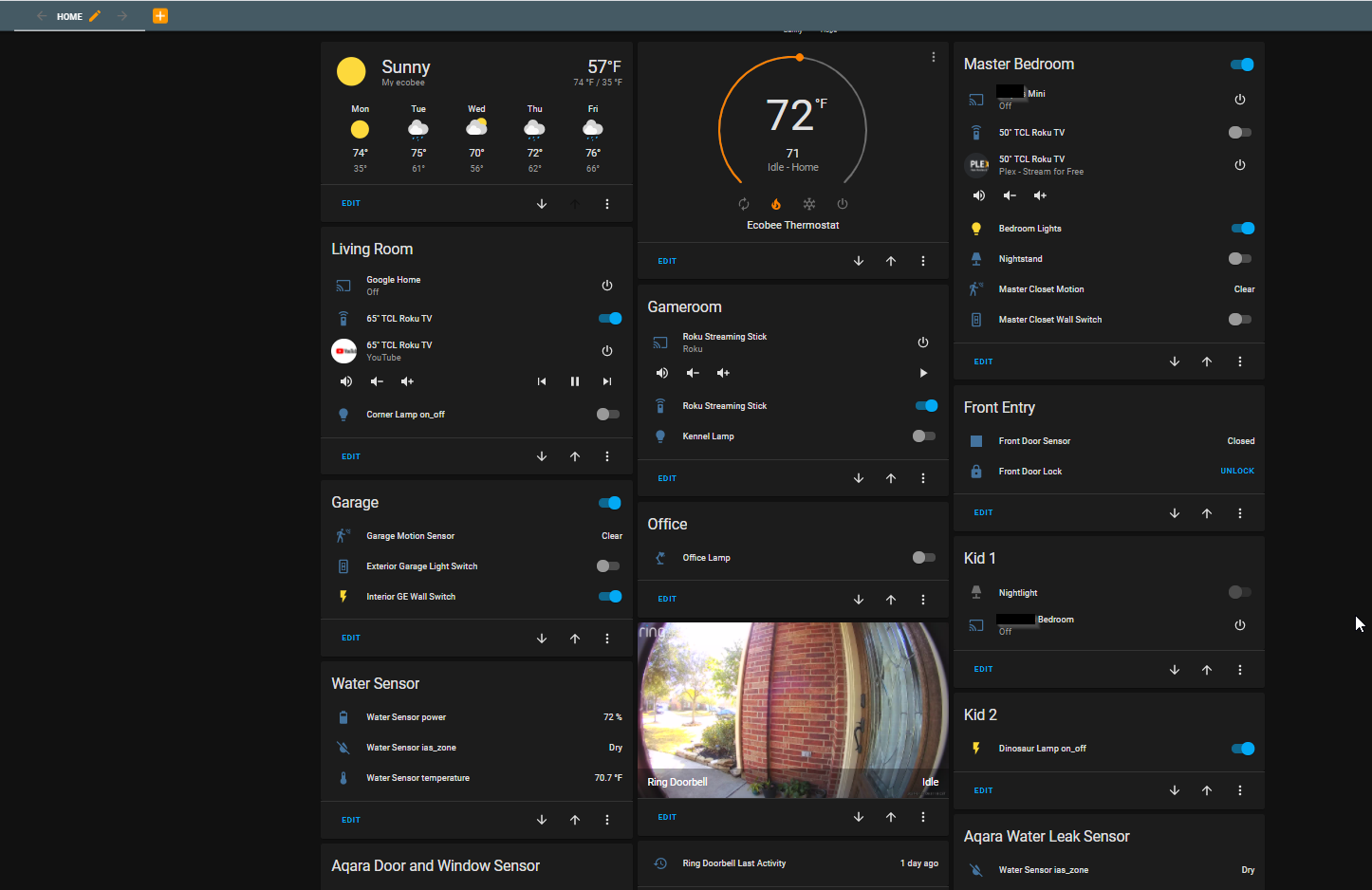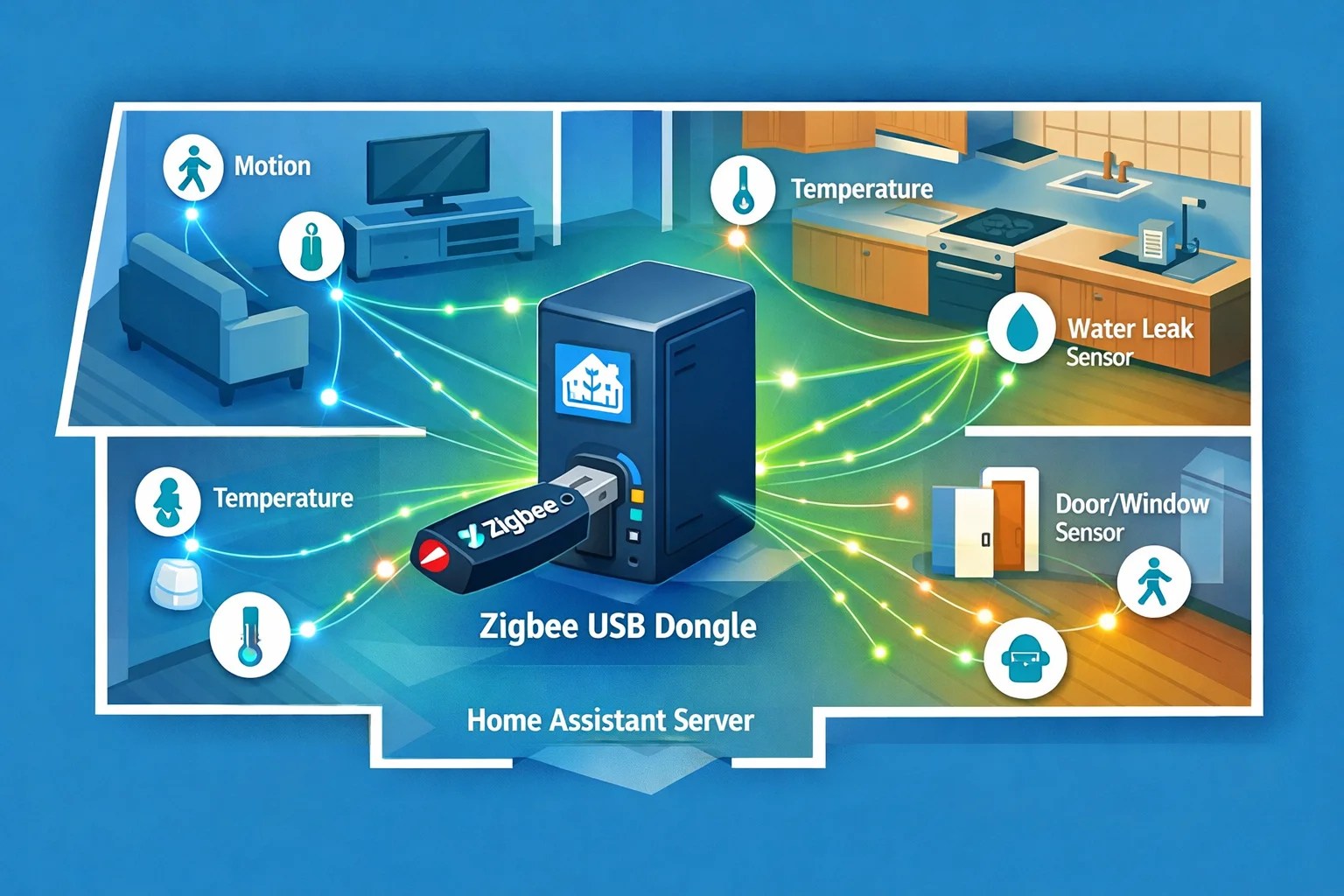
Sensors are the nervous system of a smart home. Lights, switches, and plugs are nice, but sensors are what actually make automation work. They let your home know what's happening, when, and where.
Zigbee sensors are my go-to. They're cheap, reliable, battery-efficient, and they play nicely with Home Assistant. Here are the best ones I'm using in 2026.
Motion Sensors: Aqara P2
I've been using the Aqara P2 motion sensor for a year and I'm not going back to anything else.
Why? It detects motion in five seconds, not 30. It's tiny—smaller than a lot of competitors. It's got an illuminance sensor so you can tell if the room is bright or dark, which is useful for conditional automations. And it costs $18.
The detection reset is five seconds, which means it's quick to re-trigger if motion stops and starts again. That matters if you're walking around a room.
Best automation: Motion detected + lights off if no motion for 5 minutes. It works beautifully with the P2's fast detection reset.
Verdict: Grab one. At $18, it's a no-brainer.
Contact/Door Sensors: Sonoff SNZB-04
The Sonoff is dirt cheap ($8) and it works. That's it. That's the review.
Zigbee 3.0 compatible. Contacts the hub every 60 minutes to check in (the default). Battery lasts over two years on a CR2032. No gimmicks, no extra features. Just reliable door and window detection.
Put these on every door and window. At $8 per unit, you can afford to over-cover your house.
Best automation: Door opens when nobody's home—send notification, maybe arm a scene.
Verdict: Buy in bulk. The value is unbeatable.
Temperature/Humidity: Aqara T1
I've got the Aqara Temperature Sensor T1 in four rooms. It's compact, accurate, and reports frequently.
Reports every 60 seconds if temperature changes by more than 0.5°C, or every 5 minutes if nothing's changed. That responsiveness means you catch HVAC issues quickly.
At $16, it's a solid sensor for building comprehensive automations around room temperature and humidity.
Best automation: Temperature dips below 60°—turn on thermostat. Humidity rises above 60%—turn on bathroom fan.
Verdict: Get one for each climate zone in your home.
Water Leak Sensors: Aqara Water Leak T1
Water damage is scary. This sensor catches it before it becomes a disaster.
The Aqara Water Leak T1 is flat and skinny—it sits flush on the floor under a sink or next to a water heater. When water touches the contact pads, it immediately alerts Home Assistant and triggers a local alarm (loud).
The local alarm is key. If your internet is out, this thing still screams when it detects water. That's saved me twice.
Best automation: Water detected—send phone notification, cut off water valve (if you have a smart valve), send email.
Verdict: Buy several. Put one under each sink, next to the water heater, near the washer/dryer.
Presence/mmWave: Aqara FP2
The Aqara FP2 is the expensive one at $60, but it's worth it if you want room-level presence detection instead of just motion.
mmWave radar. It knows if someone is in the room even if they're sitting completely still. You can even set up zones within a room—different automations for the couch vs. the desk.
The FP2 integrates with Home Assistant's new zone-based presence system. You can build automations like "turn on desk lamp when someone sits at the desk."
Best automation: Zone detection for complex multi-purpose rooms. Occupancy-based lighting that adapts to what you're doing.
Verdict: If you want next-level room intelligence, the FP2 is your sensor.
Why Zigbee Still Matters in a Matter World
Thread and Matter are the new hotness, and they're great. But Zigbee is still king for battery-powered sensors.
Zigbee devices last 1–2 years on a single battery. Matter devices over Wi-Fi? Maybe 2 months. Thread is better at 6–12 months, but you need a whole Thread mesh.
Zigbee is also proven. It's been rock-solid for over a decade. Thousands of devices. Massive ecosystem. Home Assistant integration is perfect.
Matter is the future, sure. But right now, Zigbee sensors are still the best choice for most people.
ZHA vs Zigbee2MQTT
Home Assistant lets you use either ZHA or Zigbee2MQTT for Zigbee coordination.
ZHA: Built into Home Assistant, simpler setup, good device support.
Zigbee2MQTT: Standalone software, more customization, better for advanced users.
For most people, ZHA is fine. Pick it, keep it simple.
Comparison Quick Table
| Sensor | Price | Best For | Battery Life |
|---|---|---|---|
| Aqara P2 (Motion) | $18 | Motion detection | 2 years |
| Sonoff SNZB-04 (Contact) | $8 | Doors/windows | 2+ years |
| Aqara T1 (Temp/Humidity) | $16 | Climate control | 2 years |
| Aqara Water Leak T1 | $18 | Water detection | 2 years |
| Aqara FP2 (Presence) | $60 | Room-level automation | Powered |
Final Thoughts
Sensors are the foundation of real smart home automation. You can't build good automations without good sensor data. These five types will cover 90% of what you need.
Start with motion and contact sensors in your main rooms. Add temperature sensors. Then layer in the special cases—water leak detection, mmWave presence.
Build your sensor network room by room, and your automations will grow naturally.
Add sensors to your smart home and watch your automations come alive.