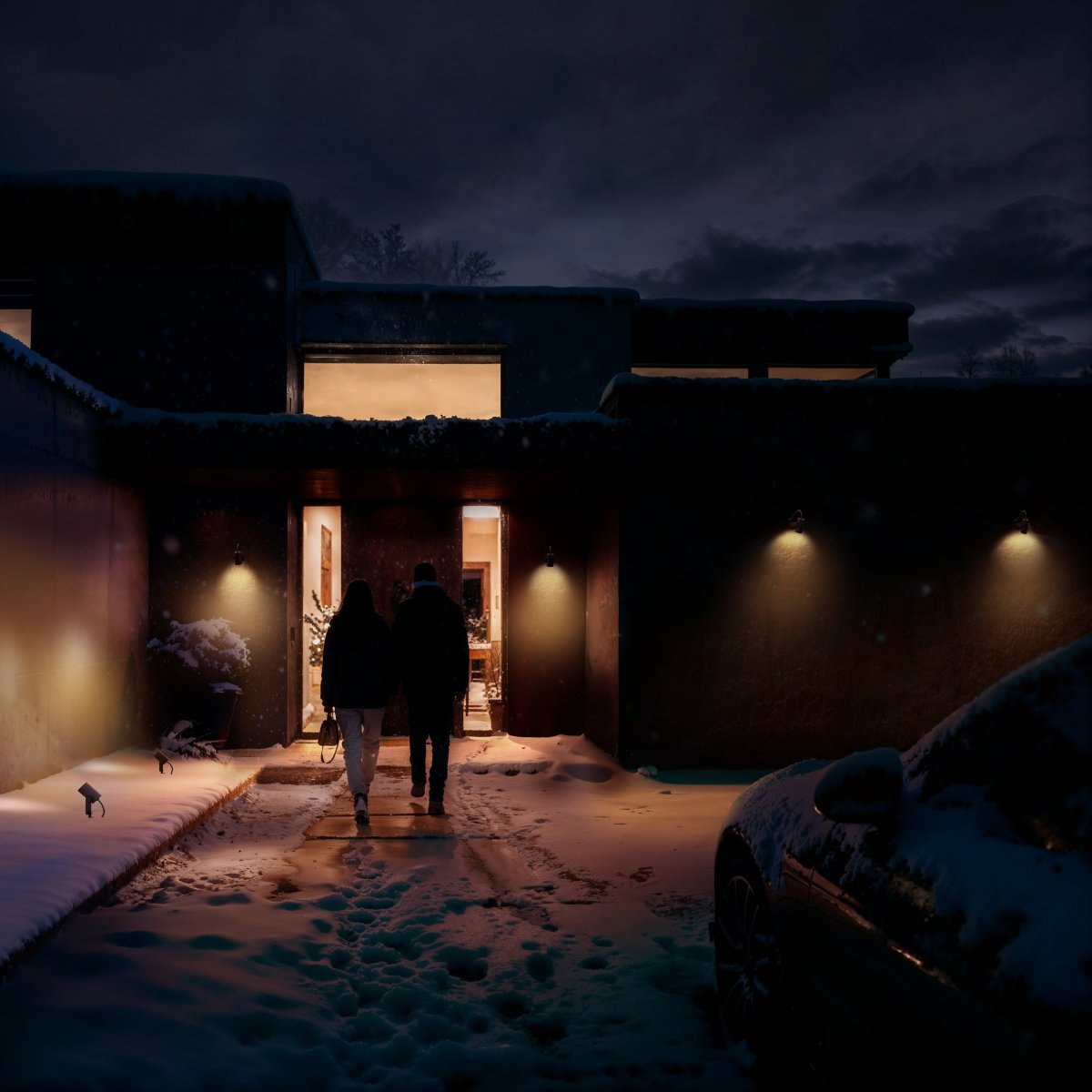
My backyard used to look like a cave after sunset. I'd flip a dumb outdoor light and hope it stayed on long enough to find my grill. Now? My landscape lights glow different colors depending on what I'm doing, pathway lights lead guests to the patio, and security spotlights trigger automatically when motion is detected.
The shift from manual outdoor lighting to smart outdoor lighting changed how I use my backyard. And there are way more solid options now than there were two years ago.
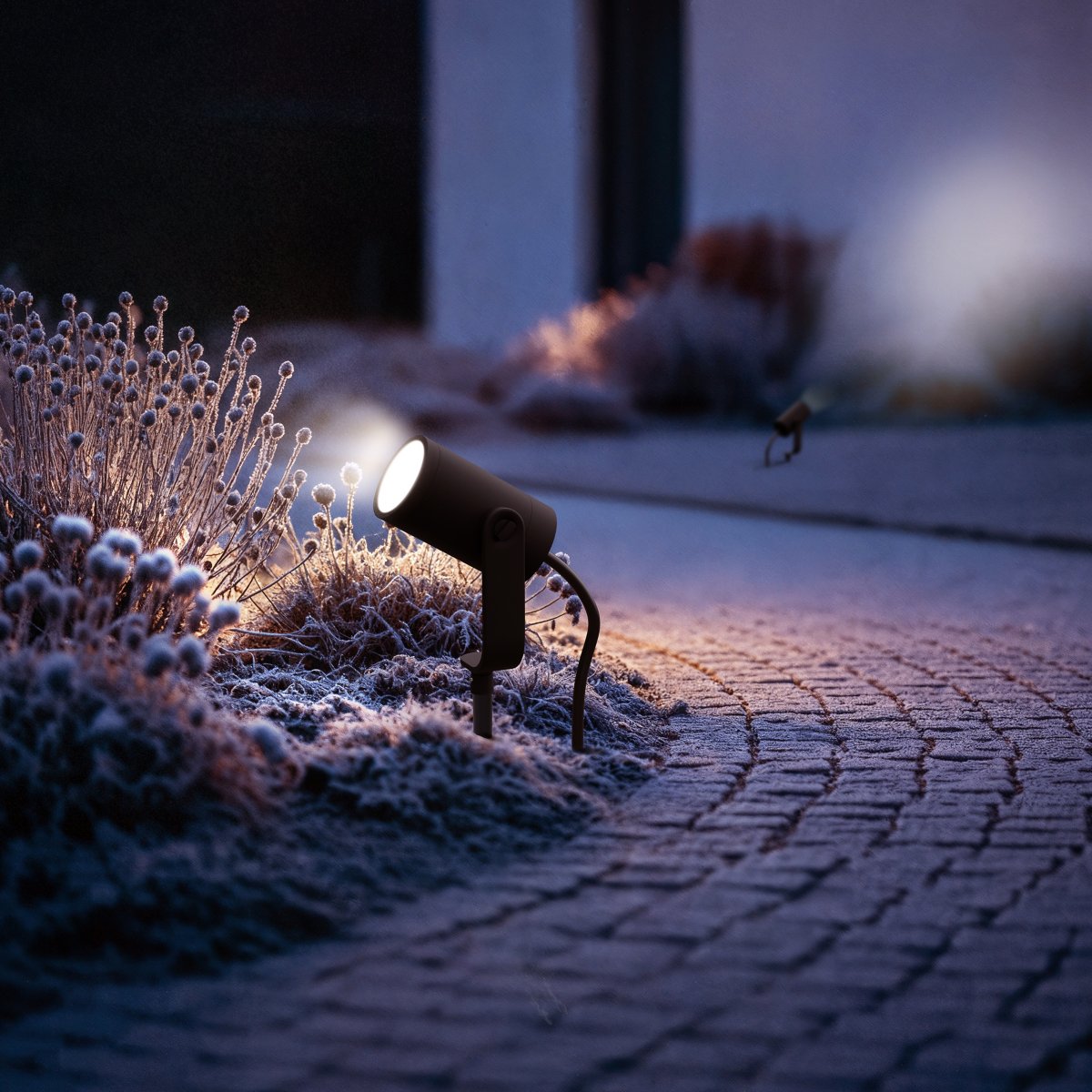
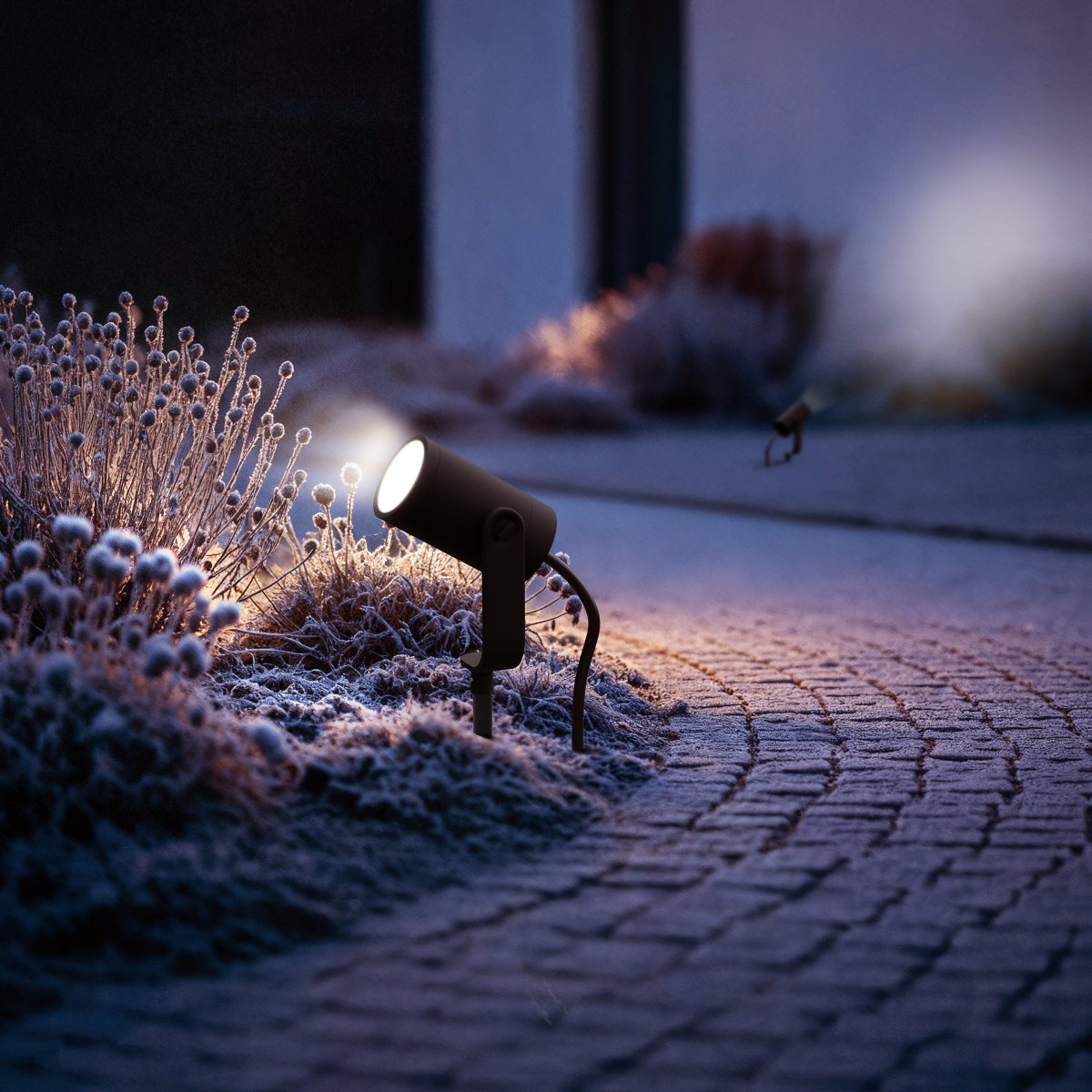
1. Philips Hue Lily Outdoor Spotlights — The Premium Choice
Price: ~$280 for a three-pack Power: Low voltage (requires transformer) Smart Home: Zigbee via Hue Bridge Colors: 16 million colors + white tones
The Philips Hue Lily spotlights are the gold standard of smart outdoor lighting. I know they're pricey, but once you own them, you understand why people spend the extra money.
These are proper landscape spotlights with directional heads. You stake them into garden beds or point them at architectural features. The IP65 rating means they handle rain, snow, and sprinklers without breaking a sweat.
Zigbee connectivity means they talk directly to your Hue Bridge (which you probably already own if you've got Hue indoor lights). The Hue app has the most intuitive color picker I've used. You can schedule them, automate them, or just enjoy the fact that they maintain consistent brightness and color across your entire yard.
Real talk: $280 for three lights stings. But they'll last years, they look professional, and the color rendering is perfect. If you're willing to invest upfront, the Hue Lilys are worth every penny.
2. Ring Smart Lighting Pathway Lights — The Security Option
Price: ~$30 per light (solar or battery versions) Power: Battery or solar-powered Smart Home: Wi-Fi via Ring Bridge ($50) Integration: Ring app + Alexa
Ring's pathway lights are cheap and practical. They're designed specifically for entryway and driveway lighting with security in mind.
Each light costs around $30. They run on batteries or solar power—no transformer, no trenching for low-voltage wire. That makes installation dead simple: stake them into the ground and walk away.
Where Ring lights get interesting: they integrate with Ring cameras. Motion detected by a Ring camera can trigger the pathway lights to brighten. So if your front door camera sees movement at 2 a.m., the pathway lights blaze at full brightness. It's a clever security feature that also happens to light up your walkway for anyone arriving home late.
Battery life depends on how often the lights activate. In low-motion areas, expect 3-4 months. In high-motion areas, more frequent.
The trade-off: they're not color-changing. You get white light at various brightness levels. But for pathway and security lighting, that's fine.
3. innr Outdoor Smart Spots — The Best Value
Price: ~$100 for three-pack Power: Low voltage (requires transformer) Smart Home: Zigbee 3.0 Compatibility: Hue Bridge, SmartThings, Alexa, Home Assistant Colors: 16 million colors
innr makes lighting that's about 40% of the price of Philips Hue with 80% of the quality. The outdoor smart spots prove this.
These are small directional spotlights in the same low-voltage ecosystem as Hue Lily. You run a single transformer-powered line through your yard and connect the lights. The Zigbee 3.0 chip means they work with your existing Zigbee setup—Hue Bridge, SmartThings, Home Assistant, whatever.
The build quality is solid. They're rated IP67 (basically waterproof). I've left mine outside through a full winter and a wet spring. No issues.
Color performance isn't quite as vibrant as Philips Hue—very slightly less saturated. But for outdoor landscape lighting, it doesn't matter. Your eye can't discern the difference at a distance, especially at night.
The app situation is your choice: use Hue Bridge, SmartThings, or Home Assistant. That flexibility is huge if you're already invested in one ecosystem.
innr is the smart choice if you want to light up landscape areas without spending Hue money. Three lights for $100 is genuinely hard to beat.
4. GLEDOPTO Zigbee Outdoor Garden Lights — The Budget DIY Pick
Price: ~$35 each Power: Low voltage (requires transformer) Smart Home: Zigbee 3.0 Compatibility: Home Assistant, SmartThings, etc. Colors: RGBCCT (RGB + color temperature control)
GLEDOPTO makes ultra-cheap Zigbee lighting hardware. Their outdoor garden lights are no exception: around $35 per light with full RGB and color temperature control.
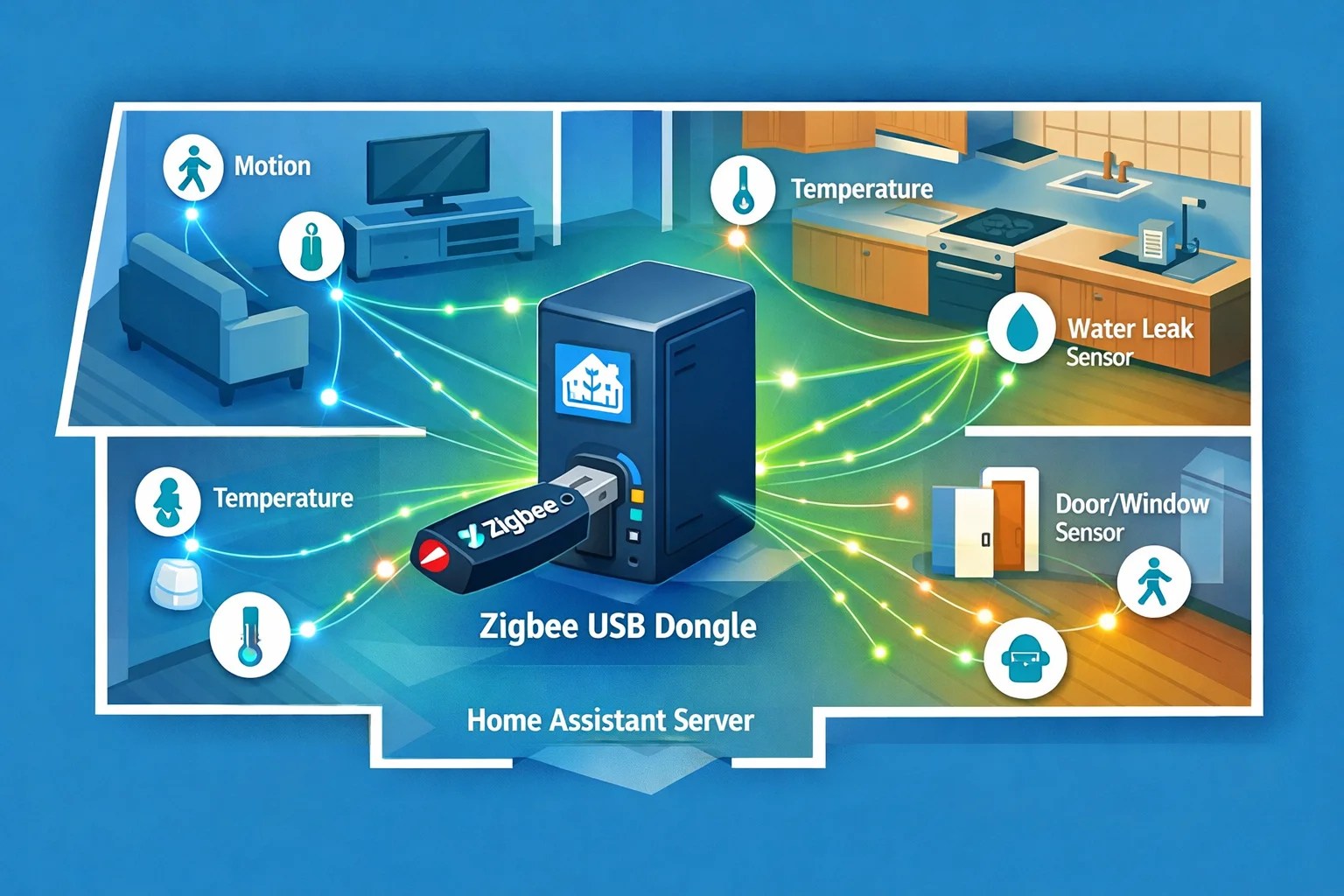
Here's the catch: you need a Zigbee coordinator. If you're running Home Assistant with a Zigbee stick, you've already got one. If not, you'll need to buy a Zigbee hub or coordinator separately (~$30-60).
Build quality is okay for the price. They're not as robust as innr or Hue, and the design is a bit plasticky. But they work, they're colorful, and the price is unbeatable for DIY folks.
This is the option for people who want to learn how Zigbee works or who are already in the Home Assistant rabbit hole and don't mind tinkering.
Technical Stuff Worth Knowing
Low-Voltage Transformer Sizing: Most landscape lights run on 12V or 24V low-voltage power. You need a transformer that handles the total wattage of your lights. Most lights are 5-15 watts each. A 100-watt transformer can handle 6-8 lights comfortably. Oversizing is fine.
Cable Gauge: Use 12-gauge or 10-gauge wire for low-voltage runs longer than 50 feet. Shorter runs can use 14-gauge. This prevents voltage drop.
IP Ratings Explained: IP65 means dust-tight and water-resistant (splashing water won't hurt it). IP67 means dust-tight and submersible (brief full water immersion is fine). For outdoor lights, IP65 minimum is the standard. Most are fine with IP65.
Automation Ideas:
- Light paths when arriving home (motion + time-based)
- Color scenes for entertaining (warm for dinner, cool for parties)
- Motion-triggered security spotlights
- Brightness based on time of day (brighter at dusk, dimmer late at night)
- Sync outdoor lights with indoor scenes (movie mode darkens everything)
Comparison Quick Reference
| Option | Price (3-pack) | Smart Home | Power | Best For |
|---|---|---|---|---|
| Philips Hue Lily | $280 | Zigbee/Hue Bridge | Low-voltage | Premium landscape, color accuracy |
| Ring Pathway | $90-120 | Wi-Fi/Ring Bridge | Battery/Solar | Security, entryways, no wiring |
| innr Outdoor Spots | $100 | Zigbee 3.0 | Low-voltage | Value landscape lighting |
| GLEDOPTO Garden | $105 | Zigbee 3.0 | Low-voltage | DIY, Home Assistant fans |
My Recommendation
If you want to spend once and forget about it: Philips Hue Lily. Best quality, best app, most reliable.
If you want half the cost with 85% of the quality: innr outdoor spots.
If you're already deep in Home Assistant and love tinkering: GLEDOPTO.
If you just want pathway and security lighting: Ring Smart Lights.
The Setup I'm Running
My backyard has a mix: three innr outdoor spots point at the patio, a Ring pathway light in the driveway, and two GLEDOPTO lights in the flower beds connected to Home Assistant. Total cost was around $250 with a transformer.
Automation: motion triggers the driveway light and patio spotlights at 20% brightness at night. When I open the patio door, the lights ramp to 80%. At sunset, they all come on at 50% unless I'm in a movie scene, which dims them to 10%. It feels custom, not scripted.
That's the magic of smart outdoor lighting—it adapts to how you actually live instead of forcing you into a one-size-fits-all system.
Buy Philips Hue Lily Outdoor on Amazon — Premium landscape lighting.
Buy innr Outdoor Spots on Amazon — Best value option.
Buy Ring Smart Lighting on Amazon — Security-focused pathways.