Five years ago, buying a smart light meant committing to an entire ecosystem. Philips Hue only worked with Hue Bridge. LIFX needed its own app. Nanoleaf demanded a separate hub. You couldn't mix and match.
Matter is supposed to fix that. And honestly, it mostly does.
The Connectivity Standards Alliance (formerly the Zigbee Alliance) created Matter as a standardized language for smart home devices. It's backed by Apple, Google, Amazon, Samsung, and over 550 other companies. The idea is simple: if a device has a Matter logo, it works with your ecosystem—whichever one you've chosen.
What Matter Actually Is
Think of Matter as the universal language of smart home devices. Before Matter, each company spoke its own dialect. Hue spoke Zigbee on a proprietary bridge. LIFX spoke Wi-Fi only. Nanoleaf added Thread support. You had to translate between them using workarounds and third-party hubs.
Matter is the translator that lives inside every device and hub. It's an application-layer protocol, which means it sits on top of your wireless network. Matter itself doesn't care whether the device uses Wi-Fi, Thread, or Ethernet. It's the conversation layer—the actual words devices use to talk to each other.

Thread vs Wi-Fi: The Big Difference
Here's where most people get confused. Matter uses two main transport layers: Thread and Wi-Fi. They're not the same thing, and understanding the difference matters.
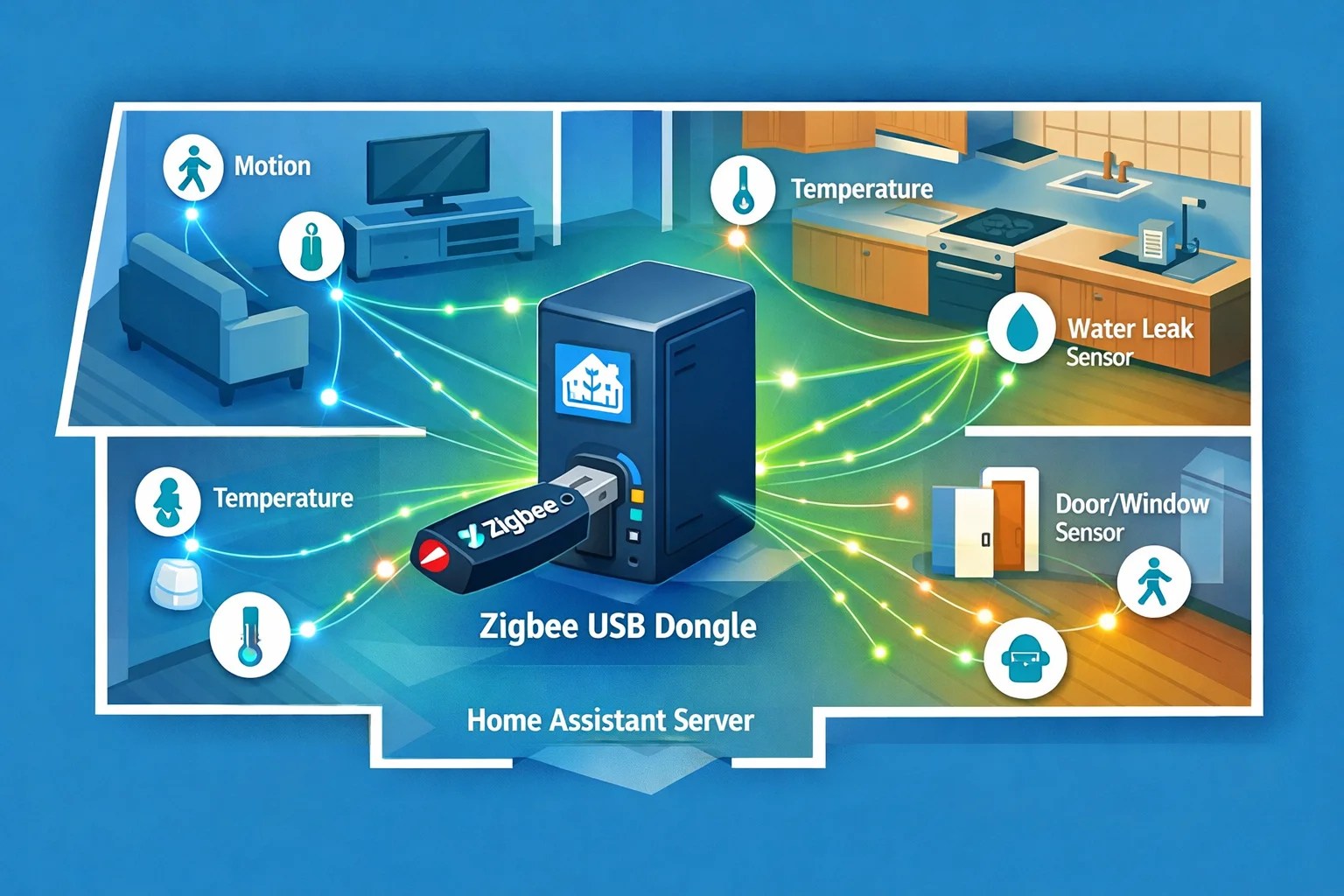
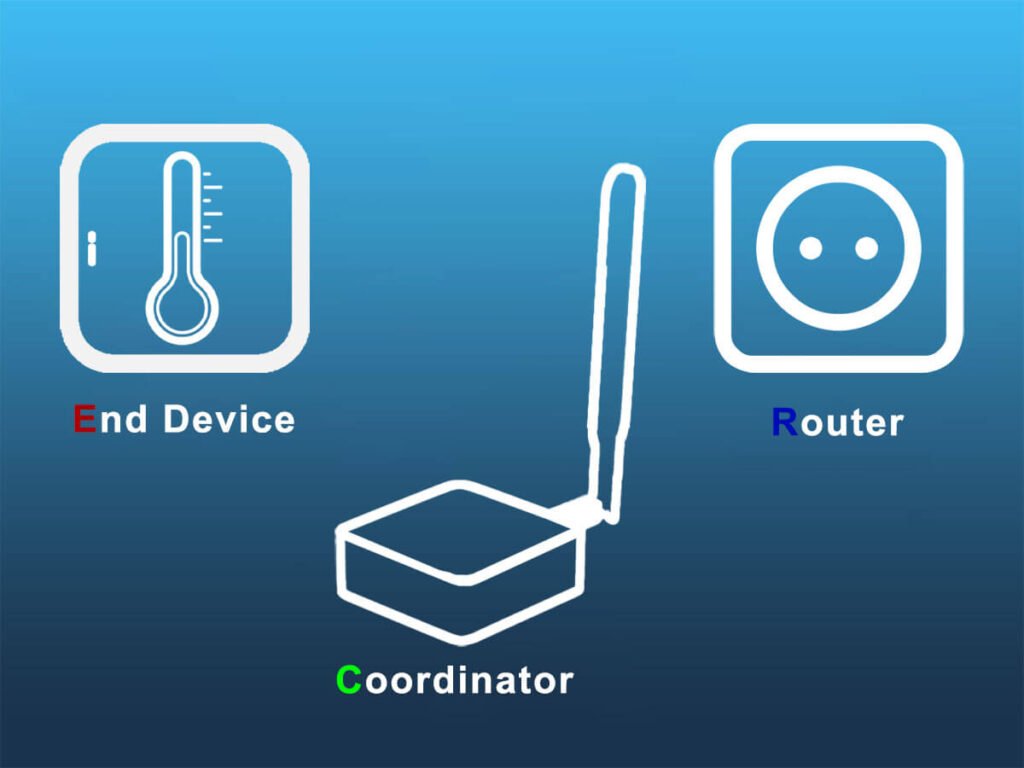
Thread is a low-power mesh protocol. Think of it like Zigbee but standardized by the entire industry instead of proprietary to one company. Thread devices wake up when needed, transmit quickly, and then go back to sleep. Batteries last years instead of months. Thread works great for door sensors, motion detectors, smart locks, and plugs.
Wi-Fi is for everything else. Cameras, speakers, thermostats, and devices that need higher bandwidth use Wi-Fi. A Wi-Fi device is always connected, always powered, and always responsive.
Most Matter devices you'll buy today use either Thread or Wi-Fi. Some premium devices (like certain smart locks) offer both. Your hub needs to support both to be useful.
The Thread mesh is important. If you have a Thread border router (like the Google Nest WiFi Pro or HomePod mini), it creates a Thread network that all your Thread devices join and extend. A door sensor in your garage can relay messages through a light bulb to your hub. It's elegant and it works.
Multi-Admin: The Game-Changer
Before Matter, if you wanted to control the same device from Apple Home and Google Home, you were out of luck. Most devices only paired with one ecosystem.
Matter's multi-admin feature changed that. One Matter device can be paired simultaneously to Apple Home, Google Home, Amazon Alexa, Samsung SmartThings, and Home Assistant at the same time. You're not choosing an ecosystem anymore—you're choosing which apps you want to use.
I tested this with a Nanoleaf light panel. Paired it to Apple Home, then Google Home, then Alexa. Same device, three ecosystems, zero conflicts. Each platform sees real-time state updates. Turn on the light in Google Home and Apple Home shows it as on instantly.
This is genuinely revolutionary if you've got family members with different phones or preferences.

What's Supported Right Now
Matter 1.0 launched with lights, plugs, locks, thermostats, window coverings, and sensors. It's expanded since.
Supported device types:
- Lights (any type—color, dimmable, on/off)
- Smart plugs and switches
- Smart locks
- Thermostats
- Window blinds and shades
- Door/window sensors
- Motion sensors
- Occupancy sensors
- Air purifiers
- Robotic vacuum cleaners (new in Matter 1.3)
- Cameras (as of Matter 1.4, and it's honestly great)
Not supported yet:
- Doorbells (they're coming)
- Sprinkler systems (Rachio is working on it)
- Full audio/multi-room speakers (too bandwidth-heavy for Thread, and Wi-Fi-based solutions are fragmented)
- Garage door openers (coming soon)
Every month, new device types get added to the spec. Matter's spec changes quarterly. It's a living standard.
The Honest Truth About Matter Today
Matter is genuinely better than the fragmented mess before it. If you're building a new smart home from scratch in 2025, buying Matter devices makes total sense. The ecosystem is real.
But—and this matters—Matter is still young. Here are the real-world quirks:
Pairing can be slow: Some devices take 30+ seconds to pair to a Matter controller. It's not as instantaneous as traditional Zigbee or Wi-Fi.
Firmware updates can break things: I've had a Matter light bulb stop responding after a manufacturer firmware update. Re-pairing fixed it, but it's annoying.
Thread mesh instability: In a new Thread network, it takes 24–48 hours for the mesh to stabilize. Devices in distant rooms might show as unresponsive for a day before the mesh heals itself. This gets better over time.
Delayed responses: A Matter lock might take 2–3 seconds to unlock via Apple Home but respond instantly when controlled locally. The cloud path is slower.
Compatibility quirks: Some devices work better with certain hubs. I've got a Matter thermostat that works flawlessly with Home Assistant but struggles with Apple Home. No clear pattern as to why.
Should You Buy Matter Devices?
Here's my actual advice:
If a device offers both a native integration AND Matter support (like Philips Hue with Hue Bridge or Eve with HomeKit), go native first. The native integration is almost always faster and more reliable because it was designed for that specific platform.
But if you want to buy one device and have it work in Apple Home AND Google Home AND Alexa simultaneously, Matter is the way. It's genuinely convenient.
For a first-time smart home buyer, I'd suggest starting with a Matter hub (IKEA DIRIGERA, HomePod mini, or Google Nest WiFi Pro) and then buying Matter-certified devices. It's the most future-proof path.
The Bottom Line
Matter fixed the core problem: device fragmentation. You're no longer locked into one ecosystem. That's huge.
Is it perfect? No. Pairing is sometimes slow. Firmware updates are unpredictable. Thread mesh takes time to stabilize.
But it's genuinely the best thing that's happened to smart homes since cheap sensors became available. The industry finally agreed on a standard. That's worth celebrating, even if the implementation is still getting better.
If you're buying smart home devices today, check for the Matter logo. It's the best signal that your purchase won't become obsolete when the next ecosystem trend comes along.