The smart garage door controller market changed dramatically when Chamberlain Group did something remarkable: they decided their 10 million myQ customers weren't allowed to use their own garage door data in their own smart home systems anymore.
In late 2023, Chamberlain blocked all third-party API access to myQ. Home Assistant integration: gone. Homebridge: gone. Any integration that wasn't paying Chamberlain a licensing fee: gone. Their reasoning — that unauthorized API access created load on their servers — didn't land well with people who'd built automations around a platform they thought they owned.
The response was ratgdo. And the market has never been better for myQ alternatives.
The myQ Situation: What Actually Happened
Chamberlain/LiftMaster garage door openers use a proprietary encrypted protocol called Security+ 2.0. Unlike simple dry-contact openers, you can't just connect a relay to open them. For years, smart home users either used Chamberlain's cloud service (myQ) or reverse-engineered the API.
When Chamberlain killed third-party API access, they also dropped Apple HomeKit support and Google Assistant. Their rationale was monetization — they wanted partners to pay for API access, and they wanted users buying their official smart home products.
The problem: myQ requires an active internet connection, a Chamberlain account, and their cloud infrastructure. Your garage door controller — physically installed in your garage — requires their servers to be online to function through any smart home system.
For anyone who cares about local control, reliability, or not depending on a company's commercial decisions, this was the push to find an alternative.
ratgdo: The Local Control Solution for Chamberlain/LiftMaster
ratgdo32 (~$62 at ratcloud.llc) is a small control board that connects to your existing Chamberlain or LiftMaster garage door opener via its serial bus. It's the only device that speaks Security+ 2.0 natively and exposes full control — open, close, position, light, and obstruction sensor — to your local network.
No cloud required. No subscription. No Chamberlain account. The opener talks to the ratgdo32 board over the same wired connection that the wall button uses.
Setup: Wire the ratgdo32 to three terminals on your opener (same terminal block as your wall button), power it via USB-C, connect to Wi-Fi, and flash with the firmware of your choice. The ratgdo32 ships without firmware — you pick ESPHome, MQTT, or Konnected firmware at flash time.
For Home Assistant users: flash with ESPHome firmware. The ratgdo32 immediately appears in HA as a device with cover entity (the door), a light entity (garage light), and obstruction sensor. Full local control, no cloud.
Compatibility: Works with Chamberlain/LiftMaster openers with yellow, red, orange, blue, purple, or brown learn buttons. Does NOT work with Security+ 3.0 openers with a white learn button (2025 and newer models from Chamberlain). If you have a white learn button, you're out of luck with ratgdo and need a different approach.
For new Chamberlain/LiftMaster purchases: avoid any opener with a white learn button if you want local control. The older models are widely available used or new-old-stock.
Tailwind iQ3 (~$90): The Best Universal Controller
If you don't have a Chamberlain/LiftMaster opener — or if you want a polished product rather than a DIY board — the Tailwind iQ3 is the best option in 2026.
The iQ3 uses dry-contact wiring and an included door sensor. It works with essentially every garage door opener brand: Genie, Overhead Door, Ryobi, and yes, Chamberlain/LiftMaster (including myQ openers — it triggers via the hardwired dry-contact connection, bypassing the proprietary protocol entirely).
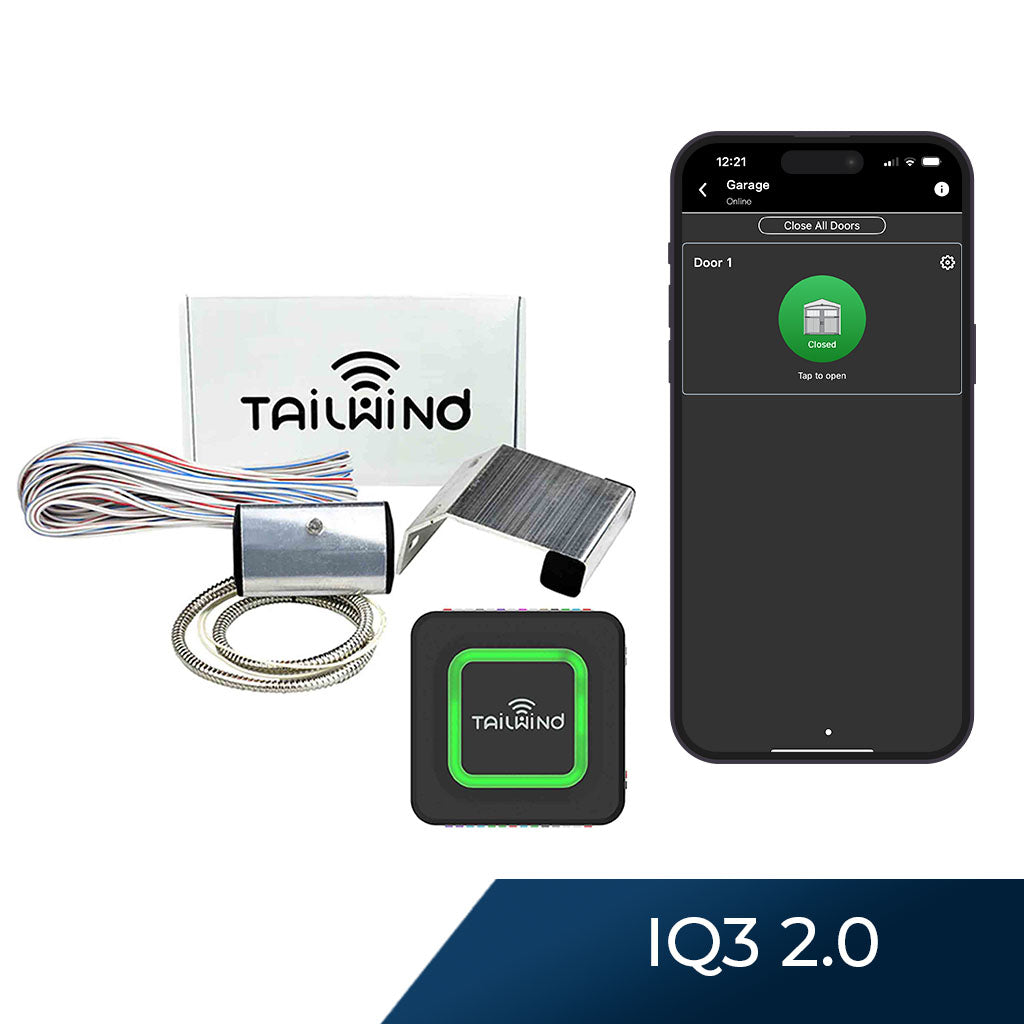
Standout features:
- Apple HomeKit native: No bridge required. The iQ3 has a real HomeKit chip and connects directly to Apple Home. This is how Tailwind became popular — when Chamberlain dropped HomeKit, Tailwind stepped in as the solution.
- Auto-open with phone presence: The iQ3 Pro detects your car's Bluetooth connection and your phone's GPS together, triggering the door before you pull into the driveway. The dual-detection approach is more reliable than GPS alone.
- Activity log with source: "Alexa opened garage door" or "Car sensor opened door" — you see exactly what triggered each event.
- Night mode: Monitors the door all night and closes it automatically if it opens. Useful if you accidentally hit the button in your pocket.
- Home Assistant integration: Works via HA's Tailwind integration or through HomeKit controller integration. Good local reliability.
The iQ3 is not a local-only device — it uses cloud for initial setup and some features. But it's far less cloud-dependent than myQ and continues working (open/close via HomeKit, schedule) even during cloud outages.
Wirecutter's pick for best smart garage door controller three years running. The $90 price is higher than alternatives, but the polish and HomeKit reliability justify it.
Meross Smart Garage Door Opener (~$30): The Budget Option
If you want HomeKit at half the price of Tailwind, the Meross MSG100 (~$30) gets it done. One controller, one included door sensor, works with all major openers (with an included adapter for Chamberlain/LiftMaster compatibility).
Meross supports Apple HomeKit, Alexa, Google Home, and SmartThings. No subscription required. The iOS app and HomeKit app experience are both adequate.
The caveat: Meross build quality and software polish are below Tailwind. The door sensor is smaller and lighter, which some users find feels less secure. Integration with Home Assistant works but isn't as smooth as Tailwind or ratgdo. For a secondary garage or a budget installation, it does the job. For a primary garage you rely on daily, I'd spend the extra $60 on a Tailwind.
Chamberlain myQ Smart Garage: If You're Already In
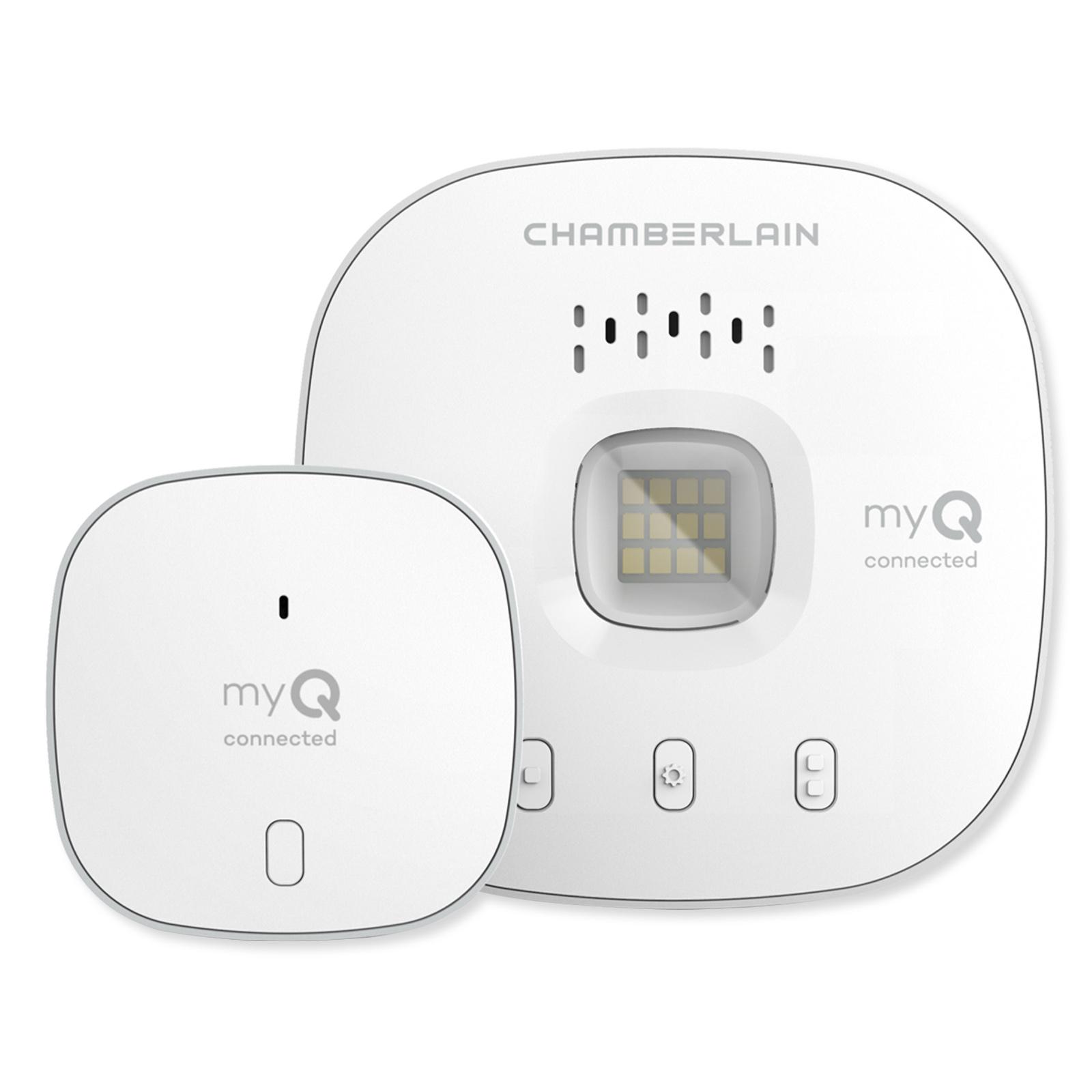
If you already have a Chamberlain opener with myQ built-in (most models sold after 2015 have it), the native myQ app works fine for basic remote control. The problems are:
- No third-party smart home integration without paying for the myQ Smart Home Bridge (~$40) or subscribing to services that aren't worth it.
- Cloud dependency — your garage requires Chamberlain's servers to be up.
- Apple removed myQ from Apple Home and Chamberlain never restored it.
For a purely Chamberlain-only setup where you just want to check if the door is open from your phone, myQ works. For any integration with other smart home systems, it's a dead end — install a ratgdo32 or Tailwind alongside it.
SwitchBot Garage Door Opener (~$50 + Hub): The No-Wiring Option
The SwitchBot Garage Door kit takes a different approach. It includes a magnetic door sensor and a wireless remote repeater that connects to your existing garage door remote via the SwitchBot Hub. No wiring to the opener itself.
This works with any garage door opener because it doesn't interface with the opener at all — it simulates pressing your remote button. The trade-off: you can't read obstruction sensor data, can't control the garage light, and status updates rely on the magnetic sensor rather than direct integration.
For a garage where wiring is difficult or the opener isn't easily accessible, this is a valid option. For a well-accessible garage where you can wire directly, ratgdo or Tailwind is better.
What to Buy: The Decision Tree
Have a Chamberlain/LiftMaster with a yellow/red/orange/blue/purple/brown learn button? → ratgdo32 ($62). Full local control, ESPHome integration, no cloud.
Want a polished product that works with any opener brand, HomeKit built-in, auto-open? → Tailwind iQ3 ($90). Best all-around controller, reliable HomeKit, good HA integration.
Budget is primary concern, want HomeKit, Chamberlain/LiftMaster opener? → Meross MSG100 ($30). Good enough, but expect software to be rougher.
Can't wire to the opener, weird opener brand, or just want minimal installation? → SwitchBot Garage Door ($50 + Hub). Wireless approach, lower integration depth.
Already have myQ and want to add smart home integration without replacing anything? → ratgdo32 if you have a compatible learn button. Installs alongside the existing opener and gives you real local control. Or Tailwind iQ3 for the polished setup with less DIY.
Home Assistant Integration Notes
ratgdo32 + ESPHome: Native ESPHome discovery. Full cover entity with open/close/stop/position, plus light and obstruction entities. Zero cloud dependency. This is the best HA integration available for any garage controller.
Tailwind iQ3: HA has a native Tailwind integration. Communication goes through the local network (not cloud) once set up. Reliable and fast.
Meross: The Meross integration works but relies on cloud. If Meross's servers are down, HA loses control. Acceptable for casual use, not ideal for critical automations.
SwitchBot: Works through SwitchBot Hub integration or via Matter if you have Hub 2. Cloud-dependent for remote control.
The pattern matches the broader smart home trend: local control gives you reliability and privacy, cloud-dependent systems give you convenience at the cost of external dependency. For a garage door — something you need to open when arriving home — local control matters.
Chamberlain's myQ lockout, as frustrating as it was, ultimately pushed the market toward better options. The smart garage door controller landscape in 2026 is healthier and more locally-controlled than it's ever been.