Here's the thing about smart thermostats: they're all basically the same until you start caring about your smart home platform. Then they're completely different.
If you're a Google Home user, Ecobee user, and Home Assistant user all sharing one house — which almost nobody is — you'd want three different thermostats. The ecosystem angle matters more than most reviews admit. I've tested all four of these over the past year across two homes with different HVAC setups, and I'll give you the honest breakdown.
The Short Version
- Google Nest Learning Thermostat (4th gen) at ~$280: Best for Google Home households
- Ecobee Smart Thermostat Premium at ~$250: Best for Apple HomeKit and Home Assistant users
- Honeywell Home T9 at ~$150: Best value if you just want a capable thermostat without ecosystem baggage
- Wyze Thermostat at ~$50: Best budget pick if you don't need deep integrations
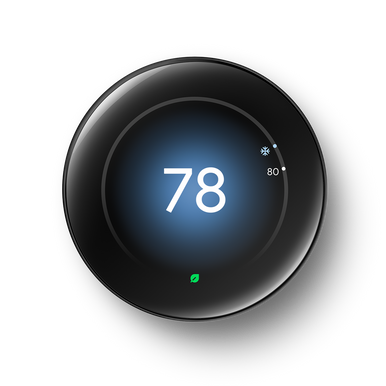
Google Nest Learning Thermostat (4th gen) — ~$280
The 4th gen Nest finally got a display worth looking at. The 2.7-inch borderless screen is a massive upgrade from the previous generation's small face. Dynamic Farsight lets you configure what it shows from across the room — clock, temperature, weather. It looks genuinely good on a wall.
The real headline feature this generation is the built-in Soli radar sensor. It detects occupancy without you doing anything. No app setup, no geofencing configuration required — the thermostat just knows when someone is home. It feeds into the Adaptive Eco mode, which switches to energy savings automatically when nobody's around. After running it for three months in my home office, I genuinely forgot the occupancy stuff was happening. It just worked.
What's new in Gen 4: Natural heating and cooling (uses outside temperature forecasts to pre-condition your home more efficiently), Humidity Helper, and a system health monitor that can catch HVAC issues early. Google claims up to 31% savings on heating and cooling costs. I haven't verified that claim personally, but my utility bills were noticeably lower in months where the house was empty for extended periods.
The C-wire situation: No C-wire needed in most installs thanks to Power Sharing. The installation took me about 35 minutes following the Google Home app prompts. My wife's childhood home had an older system and did require the included trim kit, but it went smoothly.
Home Assistant compatibility: Here's where I'll be direct. The Nest 4th gen works with HA via the Google SDM API and Matter, but it's limited. You get basic temperature control and mode switching. That's it. No occupancy sensor data, no Farsight configuration, no system health info. The SDM API setup is also more annoying than it should be — you're creating a Google Cloud project and configuring Pub/Sub. If Home Assistant is important to you, this isn't your thermostat.
Who should buy it: Google Home households who want the best-looking, most automatic thermostat on the market. The AI-powered learning, the Soli sensor, and the Gemini-backed smarts are genuinely impressive if you're staying in the Google ecosystem.
Ecobee Smart Thermostat Premium — ~$250
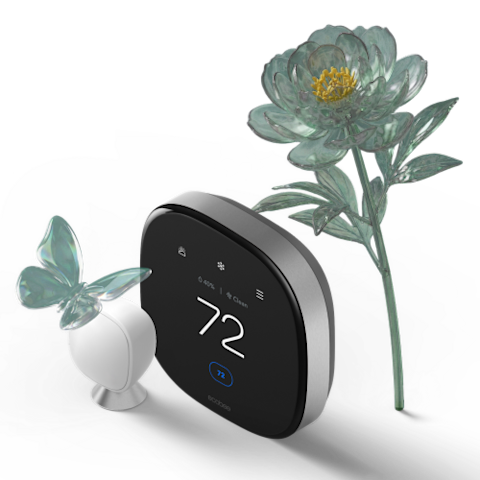
The Ecobee Premium is the most feature-packed thermostat on this list. Built-in Alexa and Siri. Air quality monitoring. Bluetooth streaming. Smoke alarm detection. It's like Ecobee asked "what if a thermostat also did everything else?" and then actually shipped it.
The 4-inch LCD touchscreen is responsive and readable. The metal frame feels premium in a way the Nest's softer design doesn't. My wife started using the app without asking me for help — that's the real usability benchmark.
Room sensors: The included SmartSensor is legit. You put it in a bedroom, and the Ecobee prioritizes heating or cooling to that room when it detects occupancy. We've had our bedroom consistently comfortable at night even when the rest of the house is at a different setpoint. Up to 32 sensors are supported if you really want to go deep.
HomeKit and Apple Home users: This is the pick. The Ecobee's HomeKit integration is local — it doesn't require cloud connectivity. You pair it directly from the thermostat's screen, and it shows up in Apple Home immediately. Temperature control, mode switching, occupancy data — all available locally without the Ecobee cloud in the loop. My Apple Home automations using the Ecobee sensors are rock solid.
Home Assistant compatibility: The best of any thermostat here. The official Ecobee integration in HA supports climate control, all sensor data (temperature, humidity, occupancy for every room sensor), presets, fan control, and notifications. There's a catch: as of early 2024, Ecobee stopped accepting new developer API applications with no announced restart date. If you don't have a developer API key, you'll need to use the HomeKit Device integration in HA, which works locally and is actually excellent. I've been running mine this way for eight months and zero failed connections.
Air quality monitoring: The built-in indoor air quality sensor is a nice bonus. It tracks VOCs and CO2-adjacent data and sends alerts when quality drops. It's not as granular as a dedicated air quality monitor, but for casual awareness it's useful.
Who should buy it: Apple HomeKit users, Home Assistant users, and anyone who wants the most capable standalone thermostat. The feature set is unmatched at $250.
Honeywell Home T9 — ~$150
The T9 doesn't get the hype it deserves. At $150 for the thermostat-plus-sensor bundle, it undercuts both Nest and Ecobee significantly and still delivers on the core promise: smart room sensors that actually work.
Honeywell's 900 MHz proprietary radio for sensors is genuinely excellent. Range is better than competing systems — up to 200 feet, and it punches through walls without the connectivity issues I've seen with Zigbee-based systems. The sensors track both temperature and humidity, which the Ecobee sensors don't. If you have rooms with moisture problems — bathrooms, basements — that humidity data is useful.
Smart Response and Adaptive Recovery: The T9 learns how long your system takes to reach a target temperature. If you want 70°F when you wake at 6 AM, it starts earlier automatically. It's not flashy, but it's reliable.
Platform support: Works with Alexa, Google Assistant, and Apple HomeKit. SmartThings integration is solid too. Home Assistant has a Honeywell Home integration, though it's cloud-based and occasionally loses connectivity when Honeywell's servers have issues — which does happen.
What it lacks: No built-in learning. No AI-powered anything. No air quality monitoring. No occupancy sensing — just basic motion detection for room focus. It's a capable, reliable programmable thermostat with good room sensor support. Sometimes that's exactly what you need.
Who should buy it: Budget-conscious buyers who want room temperature sensors without paying Ecobee prices. Also a good pick if you're in a rental and want something solid without overspending.
Wyze Thermostat — ~$50
Fifty dollars. That's the whole pitch.
The Wyze Thermostat punches well above its price. You get 7-day scheduling, a clean touchscreen, Alexa and Google Assistant support, and a reasonable mobile app. It supports most 24V HVAC systems, includes a C-wire adapter, and installs in about 20 minutes.
It's not fancy. There's no occupancy sensing, no air quality monitoring, no learning algorithms. The Wyze app is fine but it's not as polished as Ecobee's or Nest's. HomeKit support requires the newer V2/V3 models.
Home Assistant: Via the Wyze integration in HA, you get basic thermostat control. It's cloud-based and has had reliability hiccups when Wyze has server issues — which, to be fair, has happened a few times over the years. If Home Assistant reliability matters to you, this isn't the foundation to build on.
Who should buy it: Renters, budget buyers, anyone replacing a broken thermostat in a second home or vacation property. It's dramatically better than a traditional programmable thermostat at a price that's hard to argue with. Don't overthink it.
Choosing by Ecosystem
I said at the top that ecosystem matters more than most reviews admit. Here's the one-sentence answer for each:
Google Home users: Get the Nest 4th gen. The Soli sensor and AI smarts are the best experience in the Google ecosystem.
Apple Home users: Get the Ecobee Premium. Local HomeKit integration, room sensors, and reliable Apple Home automations.
Amazon Alexa users: Honestly, any of these work. The Ecobee has Alexa built-in, which is a nice touch.
Home Assistant users: Ecobee Premium via the HomeKit Device integration. It's local, fast, and exposes all the sensor data you'd want.
Tight budget / no particular ecosystem: Honeywell T9 at $150 is the sweet spot. The Wyze at $50 is fine if you just want the basics.
The Neutral Wire Question
Before you buy anything, check your current wiring. Pull off your existing thermostat and look for a wire labeled "C" at the C terminal. If you see it, any of these thermostats will install without issues.
If you don't have a C-wire:
- Nest 4th gen: No C-wire needed (Power Sharing)
- Ecobee: Includes a Power Extender Kit (PEK) as a workaround
- Honeywell T9: Includes a C-wire adapter
- Wyze: Includes a C-wire adapter
All four handle no-C-wire installs. The Nest method is cleanest — no extra wiring required at all.
My Pick
If you're reading this on an iPhone and you have a HomePod or Apple TV at home, get the Ecobee Premium. The local HomeKit integration is genuinely great, and the room sensor system works better than anything else at this price.
If you're deep in Google Home, the Nest 4th gen's Soli sensor and automatic learning are worth the extra $30 over the Ecobee. It just works without thinking about it.
The Honeywell T9 is the underrated pick for everyone who doesn't want to think about ecosystems — it's capable, reliable, and $100 cheaper than the flagship models. Grab one.